Sleeping and waking nights, so everyone else can sleep
Overnight care
A carer in the house overnight, either sleeping and on hand if needed, or awake all night for people who need regular help, so that a family carer can sleep or a person coming home from hospital is not alone.
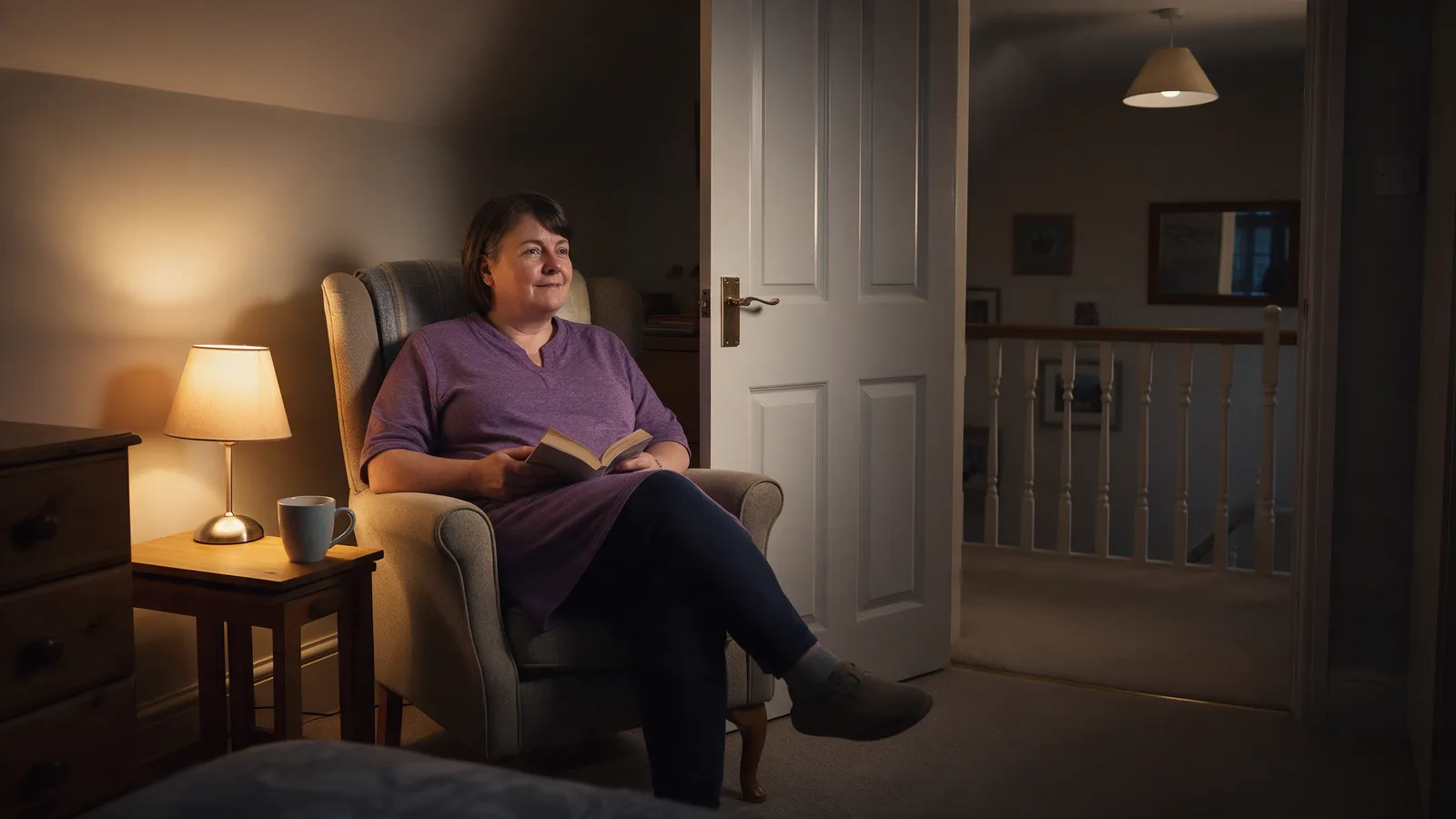
Nights are when families break. A husband who has looked after his wife all day cannot also be up three times a night for months. A night carer means he can sleep, and keep going.
A sleeping night is for people who might need help once or twice: the carer arrives at 10pm, helps with getting to bed if needed, sleeps in a spare room, gets up if called, and helps with the morning before leaving at 7am. If the carer is up more than twice in a night regularly, it is not fair to call it sleeping, and we will talk about a waking night, where the carer stays awake and helps as often as needed.
Overnight care can be booked for a single night, a few nights a week to give a family carer a rest, or every night. It works well for the first week or two after a hospital discharge, and for people with dementia whose nights are restless. The carer writes up the night in the diary so the family and the day carers know how it went.
What it includes
- Sleeping nights, 10pm to 7am
- Waking nights for regular help
- Help to bed and in the morning
- One night, a few, or every night
- Night notes in the care diary
- Combined with day visits if needed
What it costs
£160 a sleeping night, 10pm to 7am. Waking nights £230. Book one night or seven. The cost estimator works out a weekly figure, and explains what the council may pay towards.
Questions about overnight care
Does the carer need a bed?
For a sleeping night, yes: a spare room or a sofa bed in a separate room. For a waking night, a comfortable chair is enough.
Can we book one night as a trial?
Yes. Many families start with one or two nights a week to see how it feels.
Talk to Bethan or Tomos about care.
Ring, send the enquiry form or drop into Frogmore Street. We will talk through what is needed, explain the costs and the council's part honestly, and arrange a free first visit at home, usually within a week.