Familiar faces, routine and patience, at every stage
Dementia care
Care for people living with dementia, from a weekly visit in the early stages to live-in care later: the same carers, the same routine, life story work, and support for the family as things change.
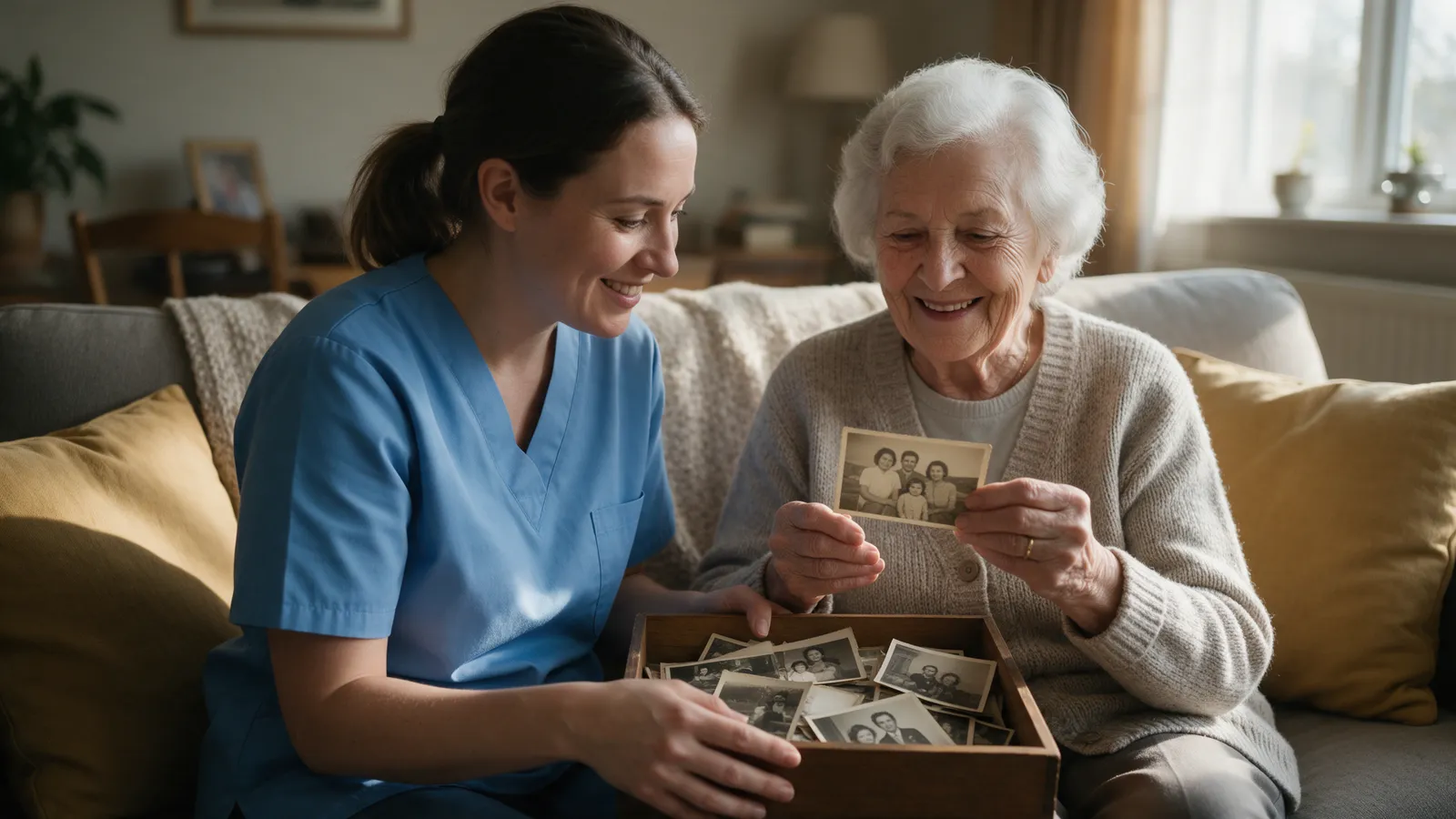
People with dementia do best with familiar faces and familiar routines, in a familiar place. That is what home care can offer and a busy ward cannot.
Every carer has dementia training before their first visit, and our dementia lead, Tomos, has further training and supports the carers and families. We start with a life story: who the person was and is, their work, family, music, the chapel or the rugby club, what upsets them and what calms them. Carers use it to start conversations and to understand behaviour that might otherwise seem baffling.
As dementia progresses, care usually increases, from a weekly companionship visit to daily visits, nights and sometimes live-in care. We plan for that with the family, and we are honest when home is no longer the safest place. We work alongside the memory team, the GP and Dementia Support services in Monmouthshire.
What it includes
- Dementia training for every carer
- A dementia lead supporting the team
- Life story work from the first visit
- The same small team, the same routine
- Care that grows as needs change
- Support and honesty for families
What it costs
The same hourly and night rates as any other care. Every carer trained in dementia care before their first visit. The cost estimator works out a weekly figure, and explains what the council may pay towards.
Questions about dementia care
My mother refuses help. What can we do?
It is common. We often start with a companion who is introduced as a friend or a helper, not a carer, and build trust slowly. Personal care usually follows once the person knows them.
Can you help with wandering at night?
Waking nights can, and so can technology such as door sensors, which the council's assistive technology service can advise on.
Talk to Bethan or Tomos about care.
Ring, send the enquiry form or drop into Frogmore Street. We will talk through what is needed, explain the costs and the council's part honestly, and arrange a free first visit at home, usually within a week.