From £180 for a small tree; a large crown reduced by a climber £650 to £1,200
Crown reduction and pruning
A tree that is too big for its garden, shading the kitchen or leaning on the phone line does not need to come down; it needs a reduction done to the British Standard, cut back to growth points so it stays the shape it was and does not throw up a thicket of regrowth. Crown lifting, thinning, deadwooding and formative pruning of young trees too.
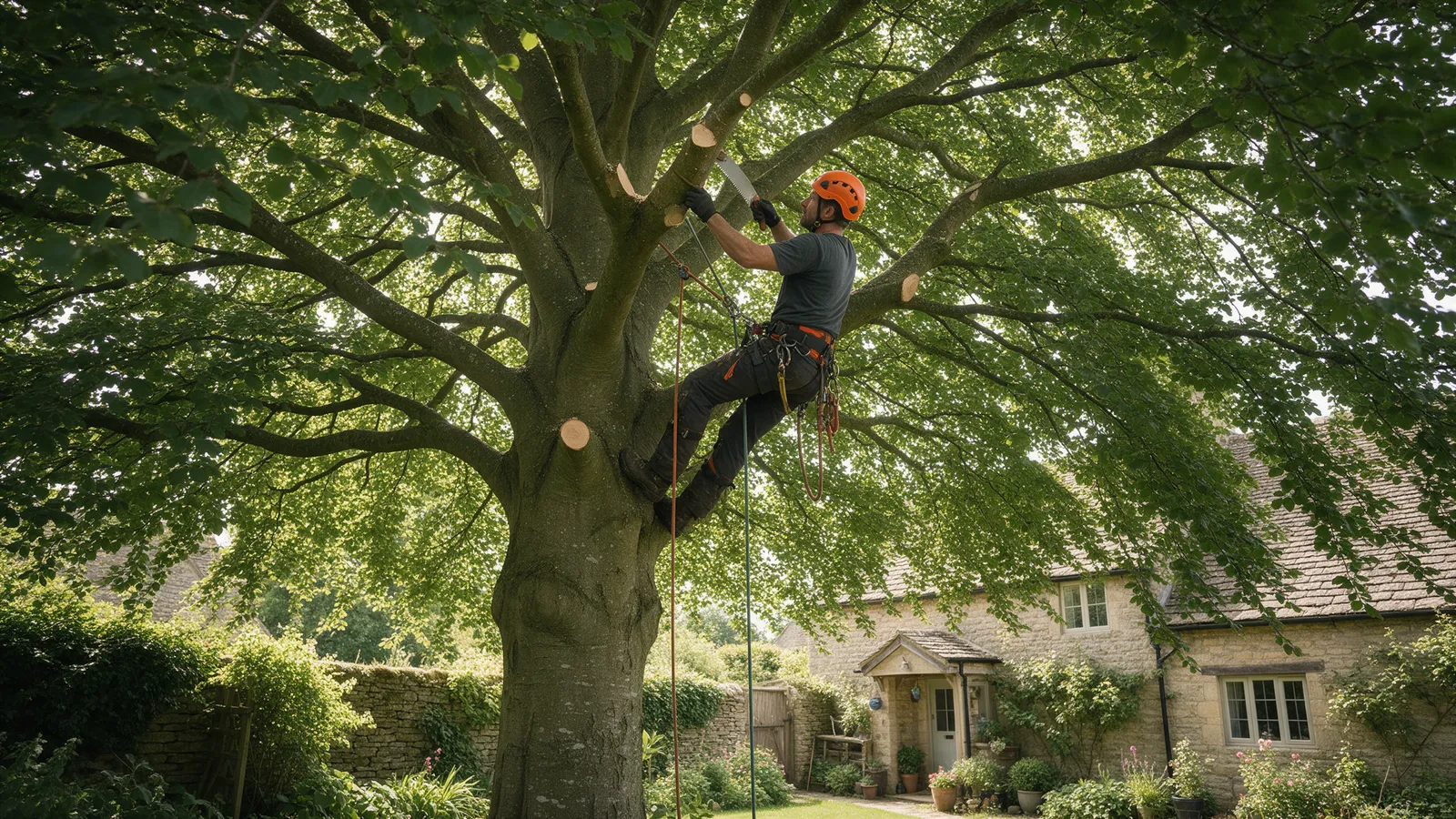
A reduction is the job most people actually need when they ring about felling. Done properly it takes the crown back by a stated amount, two metres or thirty per cent, say, with every cut made at a side branch that can take over as the new tip, so the tree keeps its shape and heals. Done badly, which the trade calls topping, it leaves stubs that rot and a crown of weak shoots that is bigger than before within three summers. We do not top trees, and we will tell you why if you ask for it.
The quote states the work in the terms of BS 3998, the British Standard for tree work: reduce by so many metres to suitable growth points, lift the crown to so many metres over the lawn, thin by so much per cent, remove deadwood over so many centimetres. That is not jargon for its own sake; it is what lets you compare our quote with the next one and what the council wants to see on a TPO application. A conservation area tree needs six weeks' notice before pruning and we do the notice.
The climber works from a rope and harness, not spikes, because spikes wound the bark on a tree that is staying. Everything comes down onto sheets, the chip goes through the chipper and the lawn is raked before we go. Fruit trees are pruned in winter, cherries and plums in summer when silver leaf is dormant, and most reductions are better in the dormant season, though we work all year and will tell you if a job should wait.
What is included
- A site visit and a quote written to BS 3998
- The TPO and conservation area check, free, and the six-week notice if needed
- Rope and harness climbing, no spikes on a retained tree
- Reduction, lifting, thinning, deadwooding or formative pruning
- Chip taken away or left for the borders, lawn raked
- A photograph before and after, sent to you
What it costs
A small tree £180 to £300, a medium tree £350 to £620, a large tree £650 to £1,200, including VAT and the chip taken away. Reductions are given as a percentage or in metres on the quote. Including VAT and £5 million of public liability cover. The estimator turns your job into a band in ten seconds; the areas page says whether your postcode carries a travel charge.
Questions about crown reduction
How much can a tree be reduced?
Usually up to a third of its height and spread in one go; more than that stresses the tree and brings regrowth. A big tree that needs halving is a candidate for a staged reduction over a few years, or honestly for felling and replanting, and we say which.
When is the best time to prune?
Most trees in winter when they are dormant and you can see the structure; cherries, plums and walnuts in high summer; nothing while birds are nesting in it, which we check from the ground and the rope before every cut.
A band from the estimator. A fixed quote after we have looked.
The estimator turns the job, the size of the tree and the access into a price band before you ring. The quote form takes two minutes; Owen or Ffion replies within two working days with a visit that week, and the quote after it is the figure on the invoice. A tree down right now: the storm line, any hour.