Designed for the job
Every scaffold is built to the industry's technical guidance for its use. Anything outside it, heavy loading, sheeting in exposed spots, unusual shapes, is designed by an engineer first.
Safety
A scaffold is only as safe as its last inspection. Here is what we do before it goes up, when we hand it over, and every week it stands.
Six rules
Every scaffold is built to the industry's technical guidance for its use. Anything outside it, heavy loading, sheeting in exposed spots, unusual shapes, is designed by an engineer first.
Every scaffolder holds a scaffolding scheme card for their level of work; trainees work under them. Card numbers are on the handover certificate (placeholders on this site).
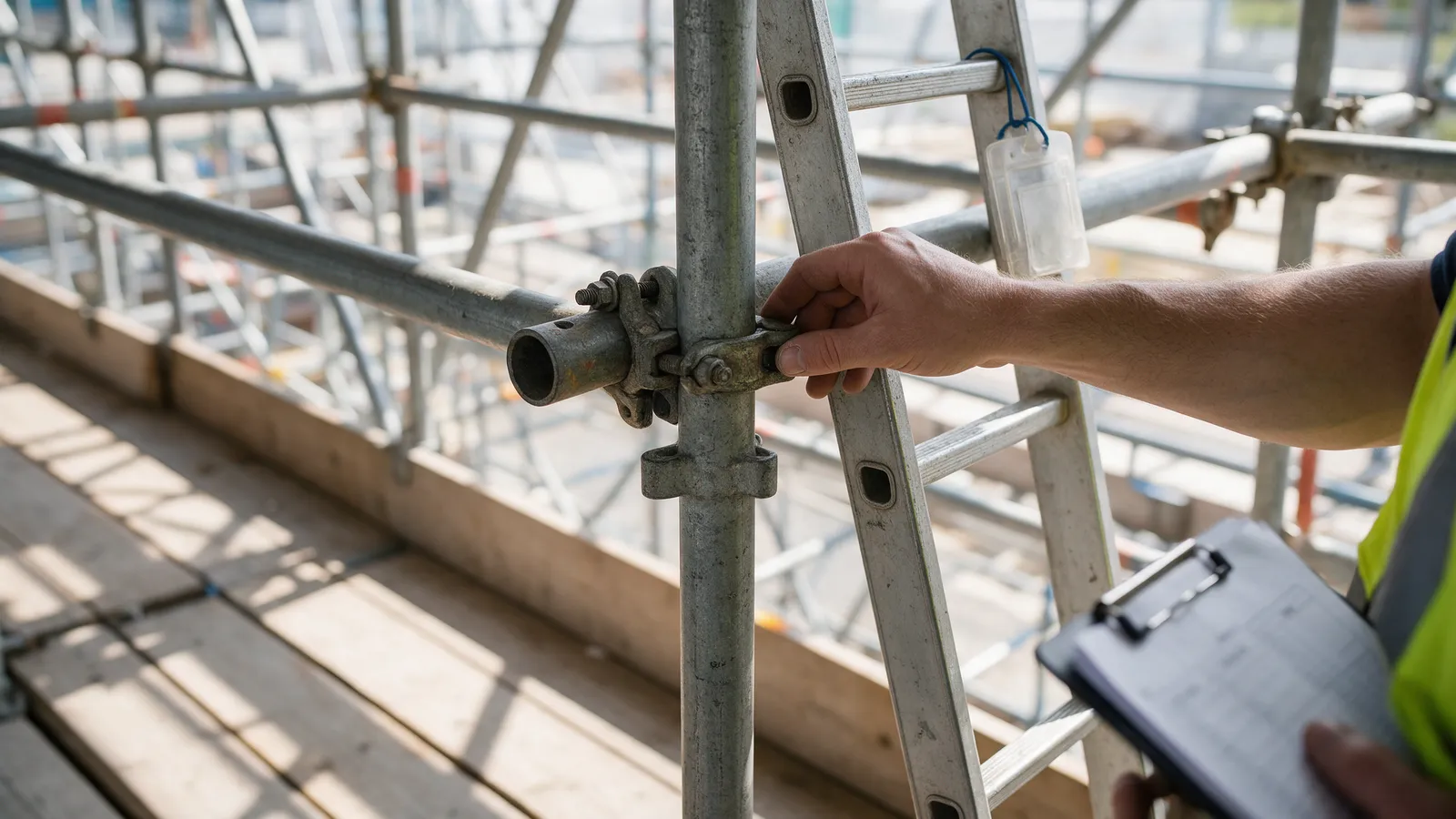
When it goes up, you and your trade get a certificate saying what the scaffold is for, its load class and who built it, and the tag at the ladder is signed.
The law requires a competent person to inspect a scaffold every seven days and after anything that could affect it, such as a storm. We do, and we sign the tag each time.
A locked guard over the ladder so children and intruders cannot climb it when no one is working.
Only we change a scaffold. If your trade needs a board moved or a lift added, ring us, and we do it the same or next day.
Your part
And if the scaffold is on the pavement, the lights at night are ours to keep working; ring if one is out.
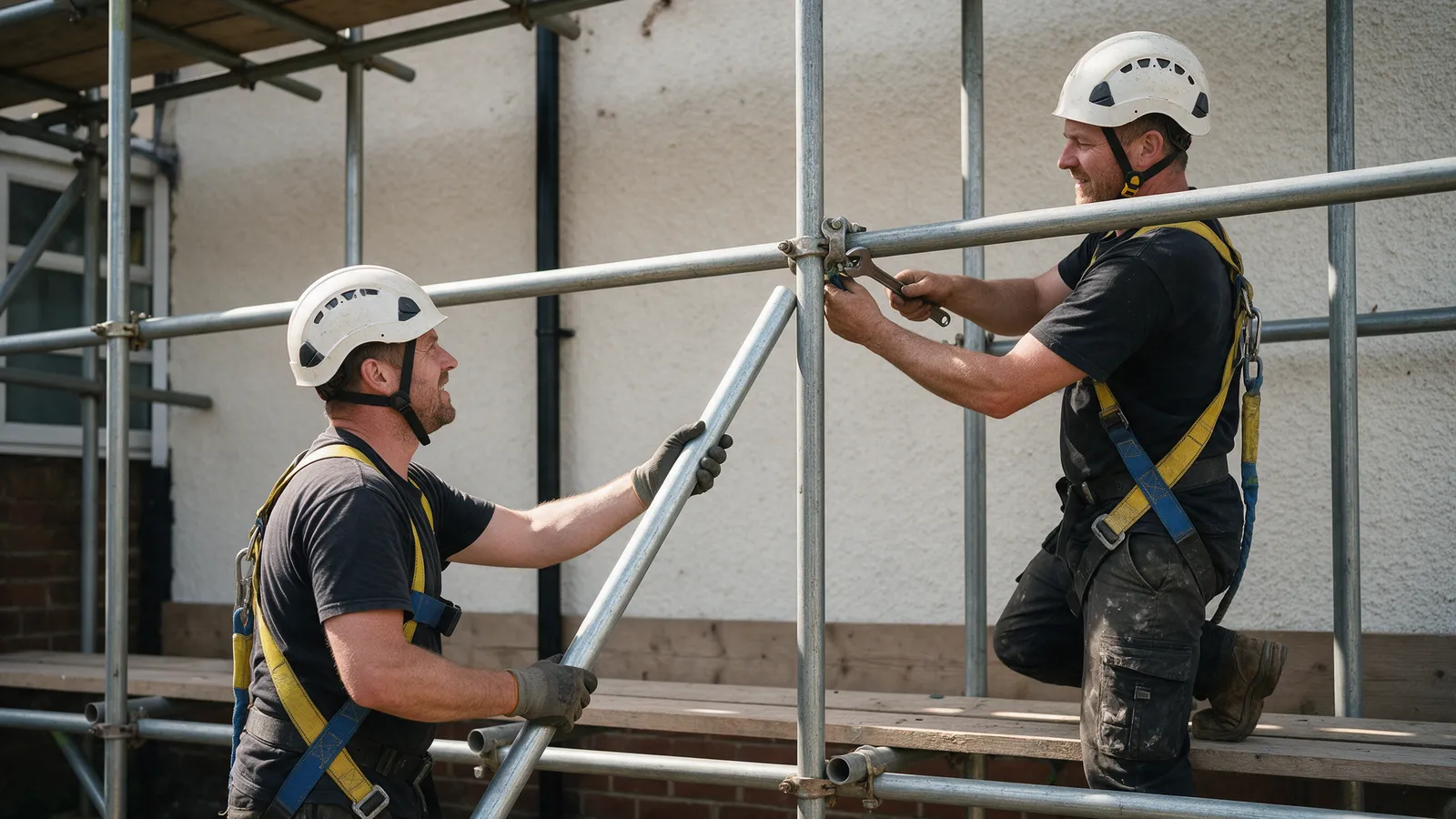
A competent person from our team: an experienced, carded scaffolder trained in inspection. Their name and the date go on the tag and the record.
They must check it is safe before they use it each day, but the formal seven-day inspection is ours, because we built it.
What the scaffold is for, its load class, which lifts are boarded, who built it and when, and any restrictions. Your trade should read it before they go up.
Craig looks at the house or building, talks to your builder or roofer if you like, and sends a written quote with four weeks' hire, inspections and the licence in it. Most domestic scaffolds go up within two weeks.