A splashback from £280; kitchen walls from £42 a square metre
Kitchens and splashbacks
Metro, zellige, glass or large-format porcelain behind the hob and the sink: set out so the cuts land evenly under the cupboards, trimmed at every edge, and grouted in a colour that will still look clean in a year.
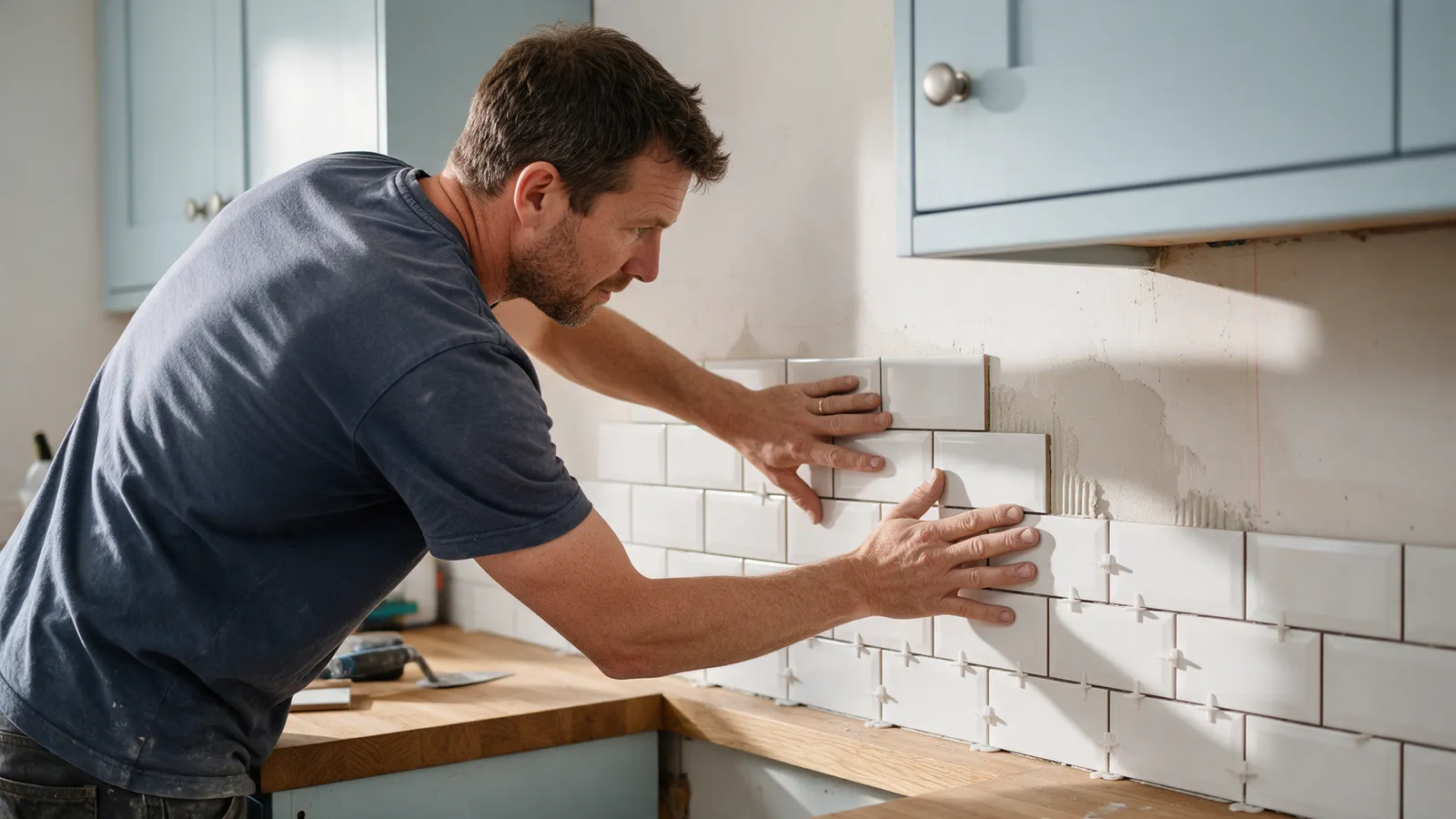
A splashback is the most looked-at tiling in a house and often the smallest. It sits between the worktop and the wall cupboards, where every cut shows and the sockets get in the way, so the set-out matters more than anywhere else: we plan it so the tiles are whole along the worktop and the cuts are equal at both ends.
We work after the kitchen fitter has fixed the worktops and before the electrician fits the socket faces, so the tiles go behind the face plates and not round them. Metro tiles are laid in brick bond or stacked, zellige with the irregular joint it is meant to have, and large-format porcelain with levelling clips so the joints sit flush. Every edge gets a trim or a mitred corner.
Behind the hob we use a heat-resistant adhesive and grout, and behind the sink an epoxy grout if you want one, because it does not stain. A typical splashback is a day; a whole kitchen wall or a feature wall is two. The calculator counts the tiles and boxes for metro, square or large-format.
What is included
- Set out so cuts are equal at both ends
- Tiles behind socket faces, not round them
- Trims or mitred corners at every edge
- Heat-resistant adhesive behind the hob
- Epoxy grout behind the sink if you want it
- Usually one day for a splashback
What it costs
A splashback, usually a day, from £280 including VAT, adhesive and grout; kitchen walls from £42 a square metre. Including VAT, adhesive, grout and trims; tiles are yours or ordered at trade price and passed on at cost. The calculator counts the tiles, boxes and bags and prices the labour.
Questions about kitchens
Can you tile over old tiles?
Sometimes, on a wall, if the old tiles are firmly stuck and the extra thickness does not foul the sockets and the worktop. We check at the survey; on a floor, rarely.
What colour grout should I use?
A shade darker than the tile for a kitchen, because white grout behind a hob does not stay white. We bring a grout card to the survey.
Do you supply the tiles?
Either: you choose and buy them, or we order them from the suppliers we use at trade price, passed on at cost.
Measure the wall, count the boxes, then a survey.
The calculator turns your width and height into tiles, whole boxes, adhesive and grout bags, the labour and the days for your tile and pattern. The quote form takes two minutes; Lowri measures every wall and floor at a free survey and the written quote follows within three working days.