Services
Rising damp treatment
Only where a survey has confirmed it: the cause removed first, then a damp-proof course and salt-resistant replastering.
Only after a survey, from about £35 a metre
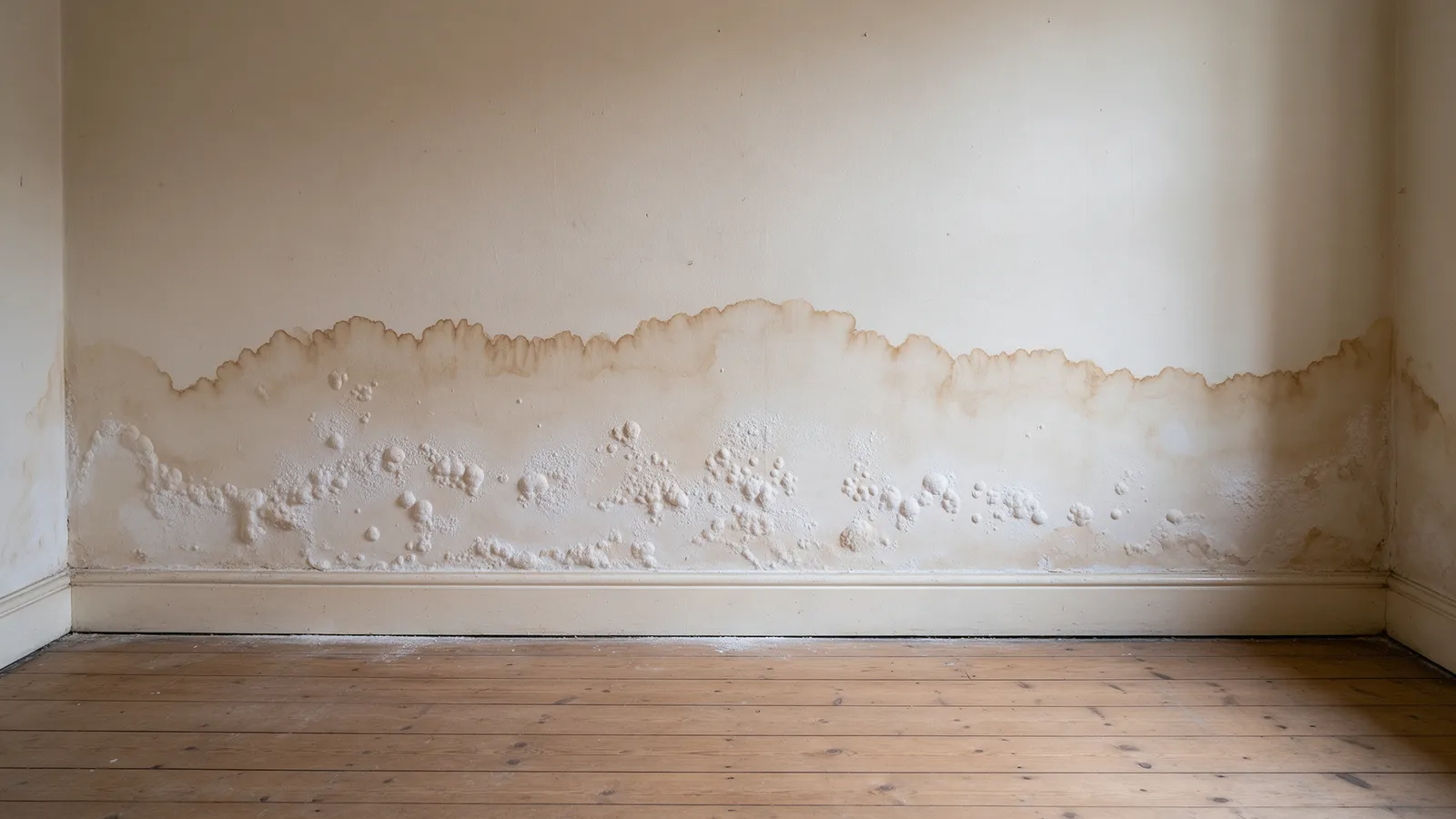
True rising damp exists, and we treat it. It is also the most over-diagnosed problem in the trade. A tide mark on a ground floor wall is far more often a bridged damp-proof course, a leaking pipe or condensation in a cold corner, and injecting the wall fixes none of those.
Before anything is injected, the cause has to be confirmed with drilled samples and the obvious things fixed: soil or a path above the damp-proof course lowered, a rendered plinth cut back, airbricks cleared. Often that is the end of it, and the wall dries out over a few months.
Where the damp-proof course has genuinely failed, we inject a silicone cream into a drilled mortar course, then hack off the salt-contaminated plaster to a metre and replaster with a salt-resistant render and plaster. Salts are what keep a wall looking damp long after it has dried, which is why the replastering matters as much as the injection.
The work carries an insurance-backed guarantee that names the walls treated. The guarantee scheme number is a placeholder on this demonstration site.
What is included
- Confirmation by drilled samples first
- External bridging fixed before any injection
- Silicone cream injection into the mortar course
- Salt-contaminated plaster removed
- Salt-resistant replastering and a guarantee
What it costs
A chemical damp-proof course from about £35 a metre; salt-resistant replastering from about £55 a square metre. Priced only after a survey has confirmed rising damp. Every treatment starts with a survey, because a survey decides what, if anything, needs doing.
A survey decides
Questions about rising damp
Someone else said I need a new damp-proof course. Do I?
Maybe. Ask what the drilled samples showed. If nobody took any, a second opinion is worth £195.
How long does the wall take to dry?
Roughly a month for every 25 millimetres of wall thickness. A Victorian solid wall can take most of a year. Decorate with breathable paint in the meantime.
Can I just replaster?
If the damp source has been fixed, often yes, with a salt-resistant plaster. Ordinary gypsum plaster on a salty wall will blow again.
Not sure what it is? That is what a survey is for.
An hour on site, outside first, with a meter, a hygrometer and a thermal camera, and a written report in three working days. About a third of our reports recommend no work by us at all.