Symptom checker
What is it likely to be?
Tick what you can see or smell and where it is. You get the likely cause, anything else it could be, and what to try first. A survey decides; this is where to start.
Your signs
Section through a solid wallThree causes of damp, and timberScaleNTSDrg.DW-01
Example
Condensation
Black mould and water on the windows, upstairs: that is condensation almost every time. Tick your own signs to see what yours points to, and what to try before you spend anything.
A survey decides
The four causes
What each one looks like.
Condensation
Warm, wet air from cooking, showers, drying washing and breathing meets a cold wall or window and turns back into water. It is the most common damp in British homes by a long way.
MoreRising damp
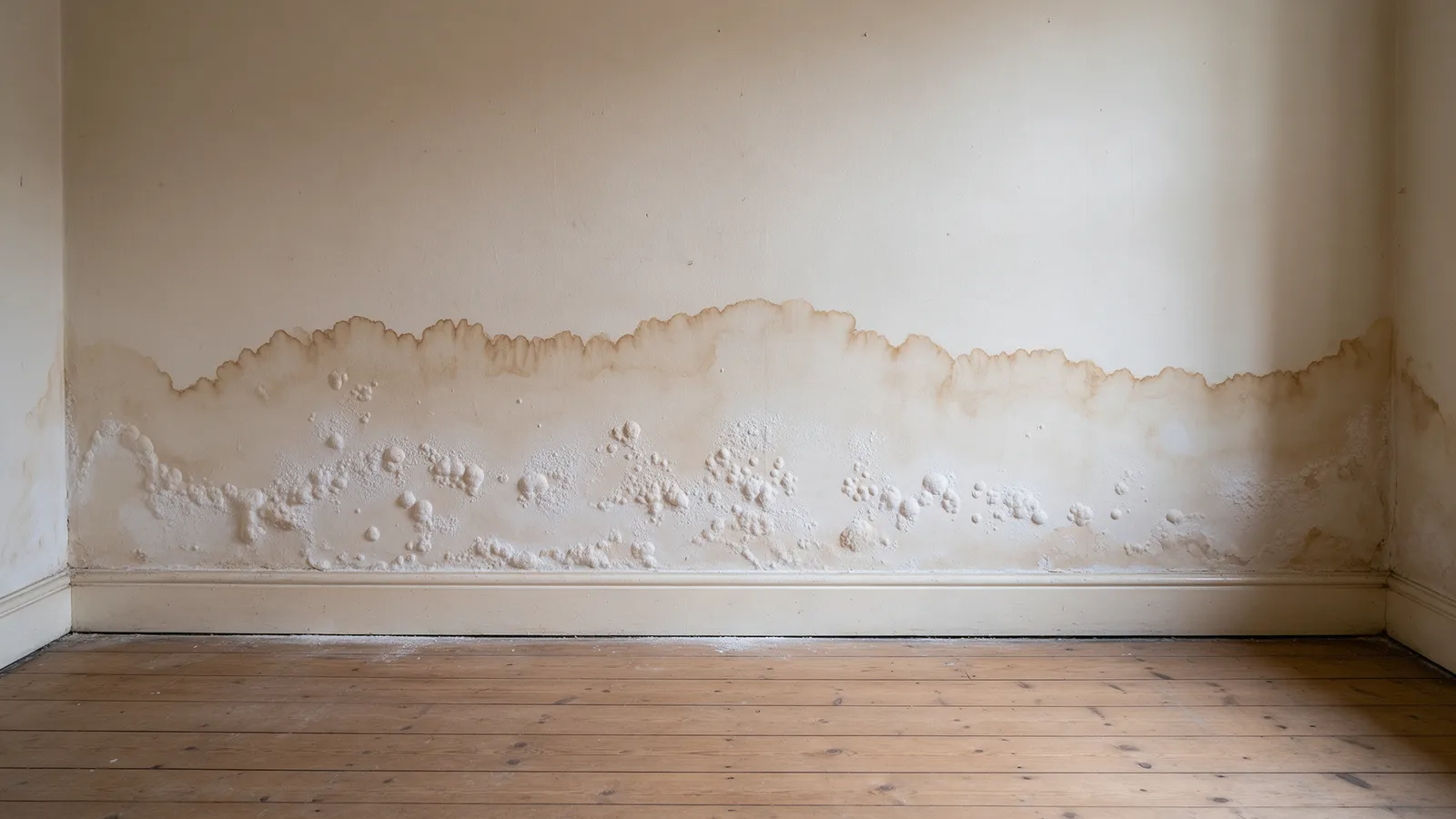
Ground water drawn up a wall that has no working damp-proof course, leaving a tide mark up to about a metre and salts in the plaster. Real, but rarer than most people are told.
MorePenetrating damp
Rain getting through the wall from outside: an overflowing gutter, a cracked downpipe, failed pointing, cracked render or a leaking chimney flashing. Patches usually grow after wet weather.
MoreTimber decay
Wet timber rots. Wet rot stays where the water is; dry rot can spread through masonry and needs fast attention. Woodworm is active only if there is fresh pale dust in spring and summer.
More
Questions about the checker
How accurate is the checker?
It weighs the signs you tick and where they are, the way a surveyor would before getting the meter out. It is right about the most likely cause more often than not, and it cannot measure anything, which is why a survey decides.
Why can rising damp not be upstairs?
Rising damp comes up from the ground and stops at about a metre. Damp upstairs is condensation, rain getting in, or a leak.
Is anything stored when I use it?
No. Your ticks are in the page address and nowhere else, and the page is not indexed by search engines once you use it.
Not sure what it is? That is what a survey is for.
An hour on site, outside first, with a meter, a hygrometer and a thermal camera, and a written report in three working days. About a third of our reports recommend no work by us at all.