Services
Cellar tanking
Turning a wet cellar into dry storage or a room, with a cavity drain membrane and a pump, after a survey of where the water comes from.
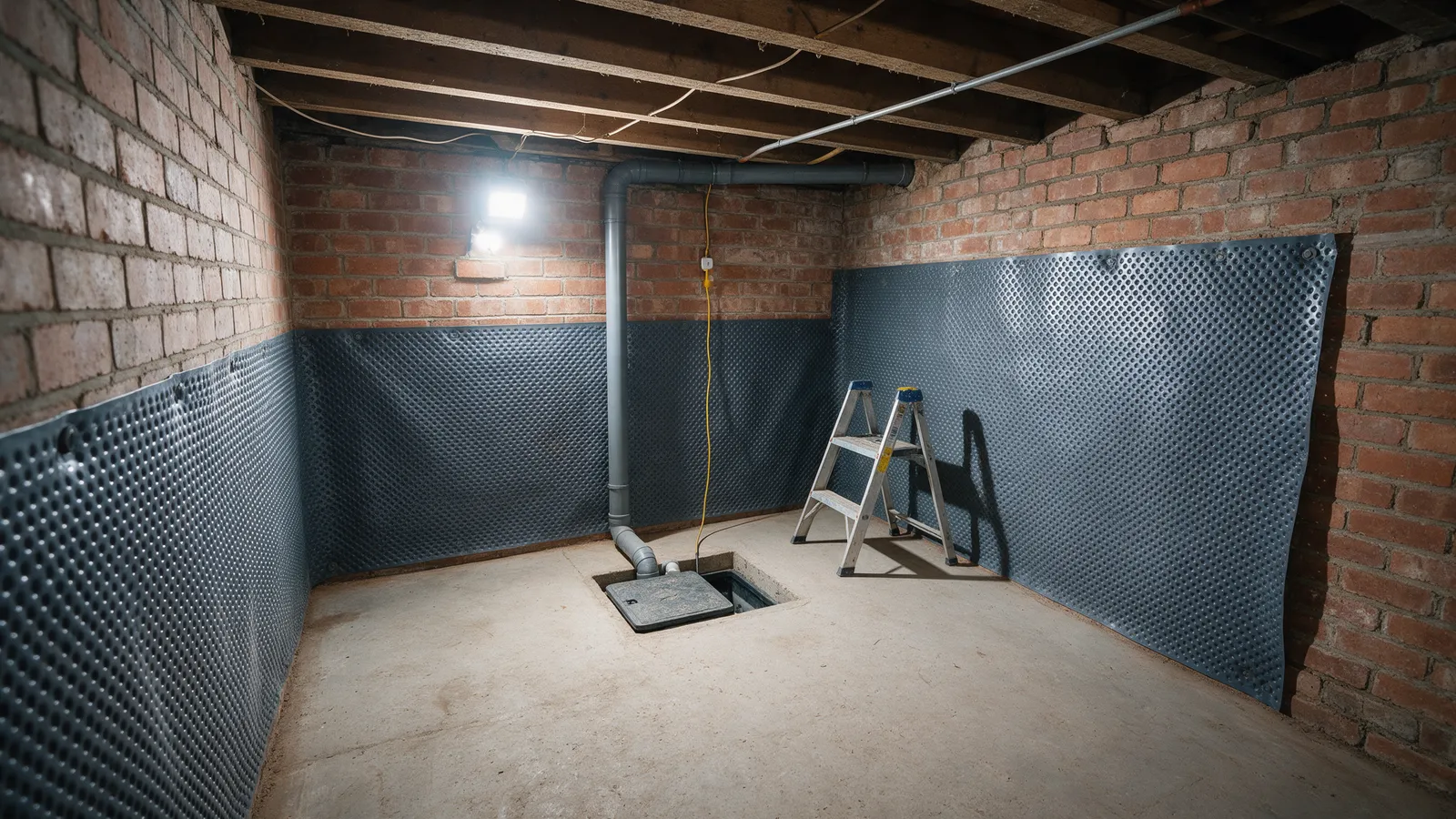
Cavity membrane systems from £85 a square metre
Cellars under Newport's Victorian terraces were built to be damp. They sit below ground with water pressing on the walls, and no amount of injection will stop that. If you want to use one, the water has to be managed, not blocked.
We line the walls and floor with a dimpled cavity drain membrane. Any water that comes through the wall runs down behind the membrane into a channel at the floor edge and on to a sump, where a pump lifts it out to a drain. The room side stays dry and can be plastered, boarded and decorated.
For storage only, a membrane on the walls and a breathable floor may be enough. For a room, it needs the full system, ventilation, a heating plan and building regulations sign-off, which we arrange.
A pump needs an annual service. We send a reminder and do it for £75.
What is included
- A survey of where the water comes in
- Cavity drain membrane walls and floor
- Perimeter channel, sump and pump
- Plasterboard on battens, ready to decorate
- An annual pump service reminder
What it costs
Cavity drain membrane systems from £85 a square metre of wall and floor, plus a sump and pump where needed; priced after a survey. Every treatment starts with a survey, because a survey decides what, if anything, needs doing.
A survey decides
Questions about cellar tanking
Can a cellar be made completely dry?
The room side, yes. The wall behind the membrane stays wet, which is why the system manages water rather than pretending to stop it.
Do I need planning permission?
Not usually for an existing cellar. Building regulations apply if it becomes a habitable room, and we handle that.
What if the pump fails?
We fit a high-water alarm, and a second pump or a battery backup where flooding would matter.
Not sure what it is? That is what a survey is for.
An hour on site, outside first, with a meter, a hygrometer and a thermal camera, and a written report in three working days. About a third of our reports recommend no work by us at all.