Nervous patients
Frightened of the dentist? Start here.
A third of our patients were terrified when they first rang. Here is exactly what happens, so there are no surprises: what the first visit is, what the stop signal means, how treatment is broken up, and what sedation involves.
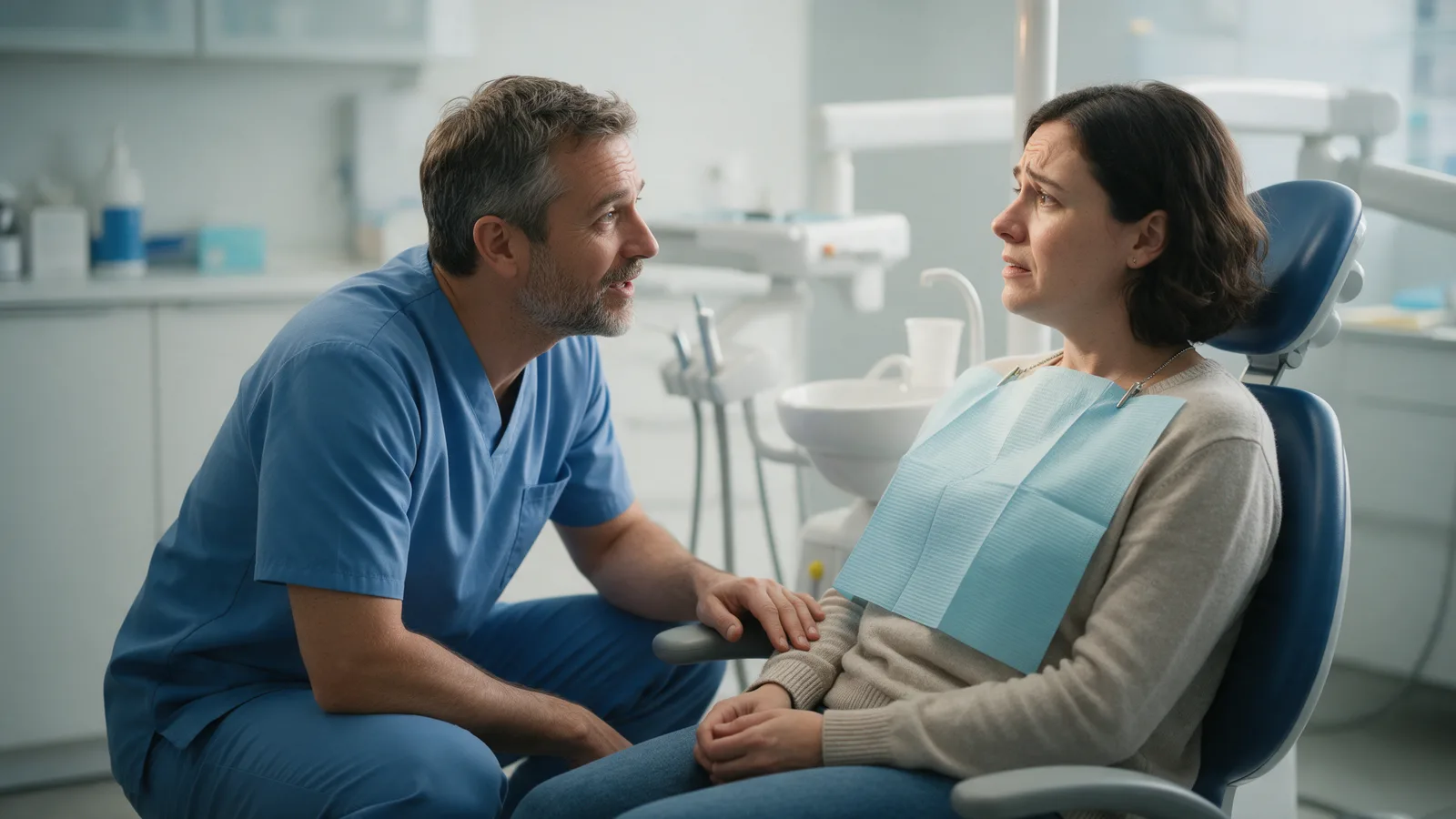
How it goes
Six steps, at your pace.
01
Tell reception
Say you are nervous when you book. You will be put with James, given a longer slot, and offered a quiet morning time with nobody in the waiting room if that helps.
02
A conversation, nothing else
The first appointment can be just a talk, in the chair or on the sofa in the surgery, door open. What happened before, what you are afraid of, what you want. Nobody examines you until you say so.
03
The stop signal
Before anything happens you agree a signal, usually a raised left hand. When you raise it we stop, immediately, without a sigh, as many times as you need. It is a rule, not a courtesy.
04
A look, when you are ready
The examination can be the second visit, or the end of the first. A mirror, a count, the photographs if you want them, and your teeth on the screen so you know what is there. Whatever we find, you will not be told off.
05
Small steps, easiest first
Treatment is planned as a list of short visits, the easiest first, so you build up a run of appointments that went fine. Numbing is done slowly with gel first and tested before anything else happens.
06
Sedation, if you need it
For fear that is beyond all that: intravenous sedation. Awake but deeply relaxed, little memory of the visit, a trained sedation team and monitoring throughout. Many people need it once or twice and then manage without.
Sedation
What intravenous sedation actually is.
A small cannula in the back of your hand, a sedative that takes two minutes to work, and a dentist who is trained and certified in conscious sedation with a nurse whose only job is to watch you. You are awake and can respond, but relaxed to the point of not caring, and most people remember almost nothing afterwards. You need someone to take you home and to stay with you that day.
It costs £295 a session on top of the treatment fee, and it needs an assessment visit first: your medical history, your medication, your weight, and a conversation about whether it is the right tool. It is not for examinations alone, and it is not for everyone; for some patients the slow approach without it works better, and we will say which we think you are.

Also
Gagging, sensory needs, bad past experiences.
A strong gag reflex
Digital scanning instead of impression trays, a numbing spray for the palate, short bursts, and a raised chair position. X-rays can be taken from outside the mouth.
Autism and sensory needs
A quiet slot, the lights down, no radio, the same dentist and nurse each time, a visit beforehand just to see the room. Tell us what helps and we write it on your record.
A bad experience elsewhere
Tell us what happened. We will not do it. If it was pain during treatment, we test the numbing before we start and stop the moment you signal; if it was being told off, that does not happen here.
Cost worry
Every fee is on the fees page and you get a written plan before anything is booked. The membership plan spreads the routine cost, and we will stage treatment over months if that helps.
Start with a conversation.
Tell reception you are nervous and ask for James. The first visit can be a talk in the chair with nothing in your mouth, and nobody will ask how long it has been.