Symptom finder
What is wrong with my foot?
Nine things people walk in with. Pick the closest for the likely cause, what we would do and what it costs. It is a guide, not a diagnosis; the first appointment is for checking it, and the page says plainly when something should not wait for us.
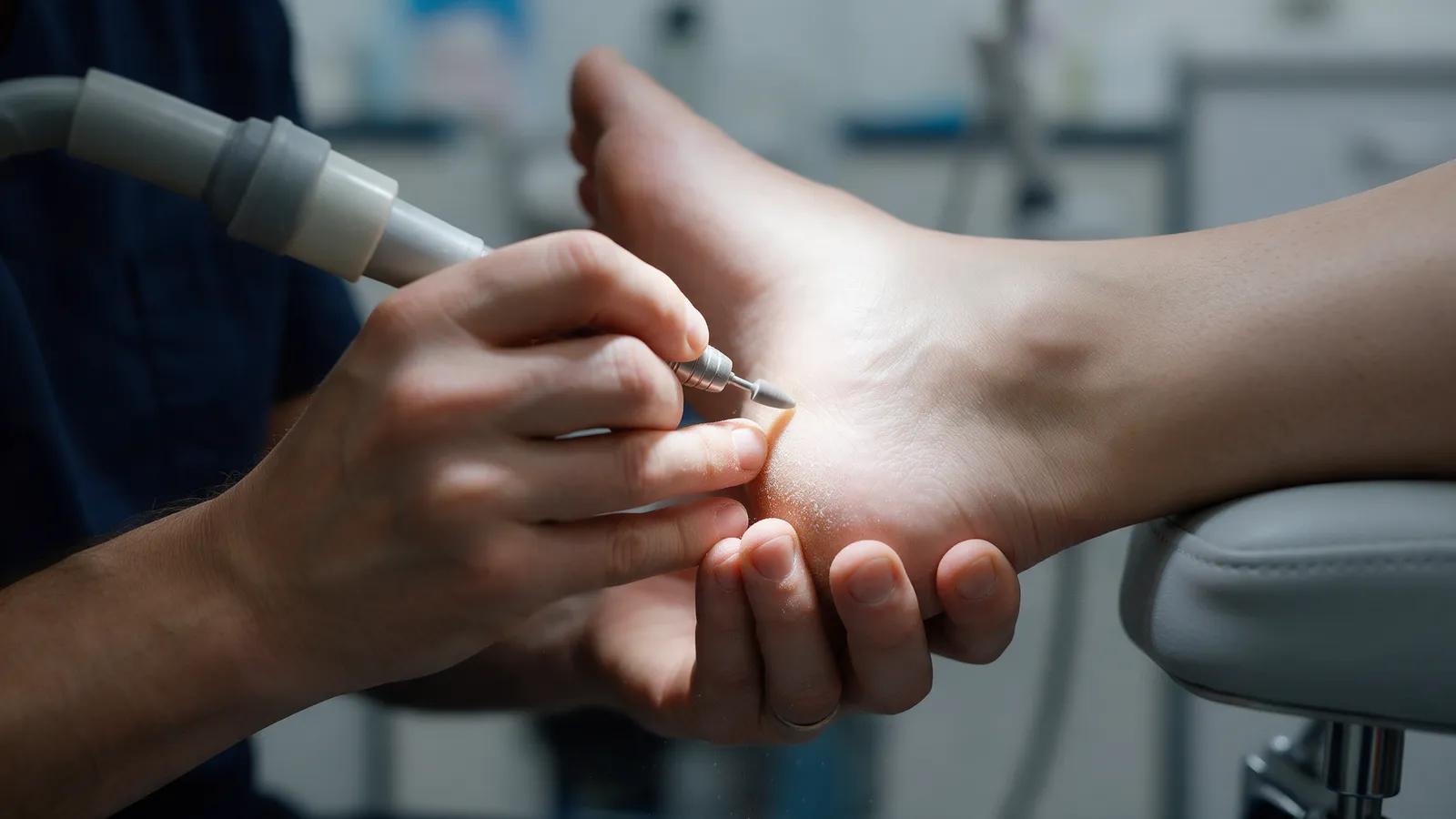
The symptom finder
Dry, cracked heels
- The likely cause
- Thick, dry skin around the heel rim that splits under pressure, worse in winter, with open-backed shoes and with some medical conditions.
- What we would do
- The hard skin reduced, the cracks treated, and the urea cream named that keeps them closed if used daily.
First appointment £52, routine visits £42
When not to wait
Some feet should be seen today, and not necessarily by us.
A wound that is getting worse, a foot that is hot, red and swollen, a smell, a toe that has gone pale, blue or black, or sudden pain in a foot with diabetes: these need someone today. Ring us and we will fit you in or tell you honestly to go to the minor injuries unit, A&E or 111. High-risk diabetic patients have a mobile number for exactly this.

Questions about the finder
Is the symptom finder a diagnosis?
No. It is what the symptom usually turns out to be, so you know what to book and roughly what it costs. The first appointment checks it, and sometimes it is something else.
Do I need to see my GP first?
No; you can book directly. If your GP has already seen it, bring anything they wrote. If we find something that needs your GP, we write to them.
What if more than one thing is wrong?
Book a first appointment and tell us everything: it is forty-five minutes and covers the lot, and we plan from there.
The next free appointment is on this website.
A first appointment is forty-five minutes and £52: the history, the circulation and sensation checks, and the treatment itself. Book online from an hour and a half ahead or ring the clinic; two slots a day are kept for painful problems that should not wait.