Timber guide
Which timber?
Most of the questions we are asked are really this one. Here are the nine timbers we make with, what each is good for, how much it moves and roughly what it costs against oak.
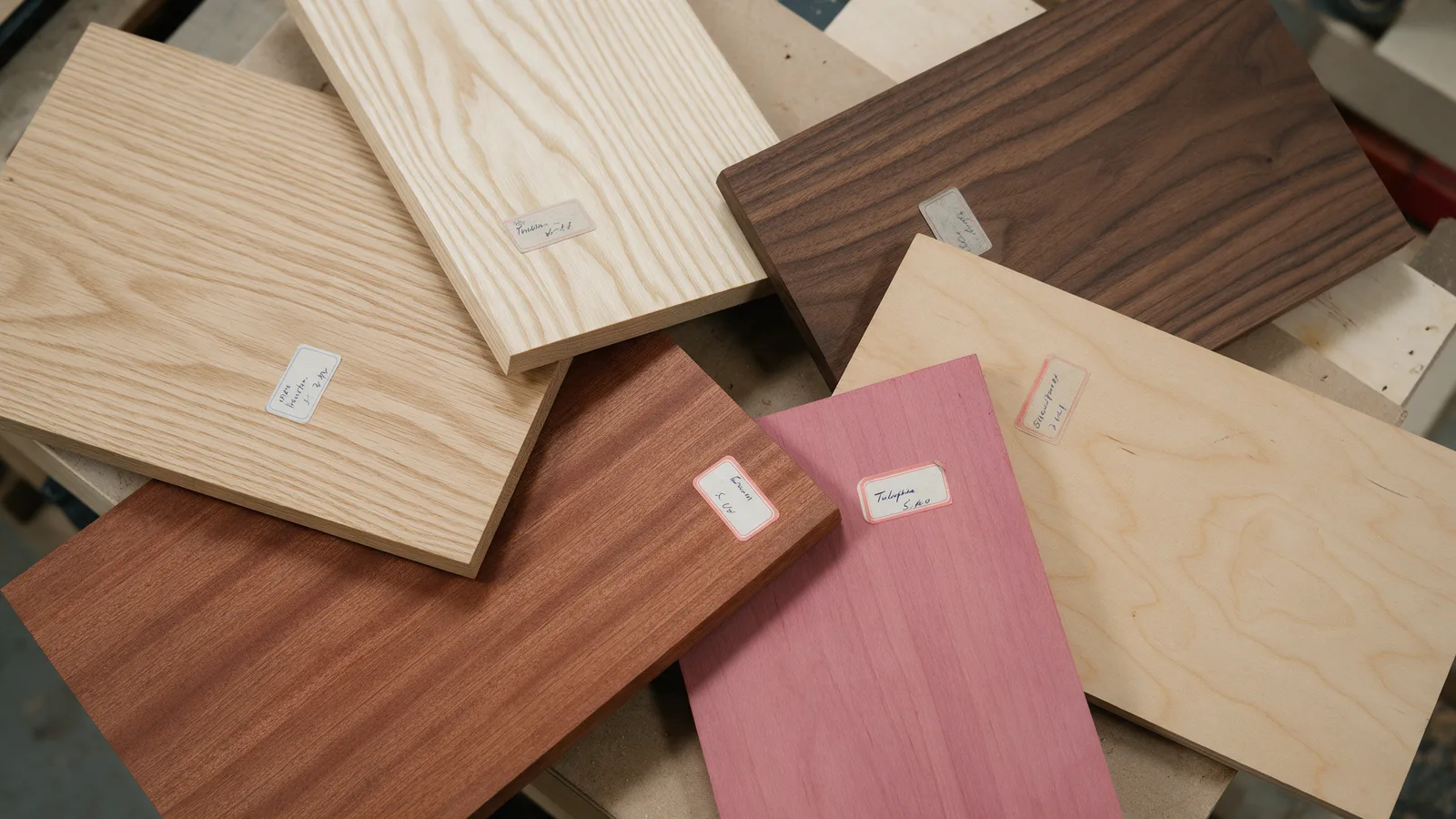
The nine
Colour, hardness, movement, use and price.
Movement is how much the timber swells and shrinks between a wet August and a centrally heated January. Everything moves; the design allows for it. Price is relative to oak at ££.
| Timber | Colour | Hardness | Movement | Best for | Price |
|---|---|---|---|---|---|
| European oak | Pale honey, darkens to amber | Hard | Medium | Tables, stairs, worktops, doors, anything that has to last | ££ |
| Ash | Pale cream with a bold grain | Hard | Medium | Tables, chairs, stair treads; a paler, cheaper oak | ££ |
| Walnut | Deep brown with purple tones | Medium | Low | Dining tables, desks, sideboards, anything you want to show off | ££££ |
| Elm | Warm brown with a wild grain | Medium | Medium | Tabletops, seats, statement pieces | £££ |
| Sycamore | Near white, fine grain | Hard | Medium | Worktops, chopping boards, light modern furniture | ££ |
| Sapele | Reddish brown, ribbon figure | Hard | Low | Windows, external doors, anything outside | ££ |
| Accoya | Pale, takes paint perfectly | Medium | Very low | Painted sash windows and doors; fifty-year rot guarantee | £££ |
| Tulipwood | Greenish cream, plain | Medium | Low | Anything to be painted: kitchen doors, wardrobes, alcoves | £ |
| Birch plywood | Pale, striped edge | Hard | Very low | Carcasses, drawer boxes, shelves; the inside of everything we make | £ |
Why movement matters
Wood is not finished moving when it leaves the forest.
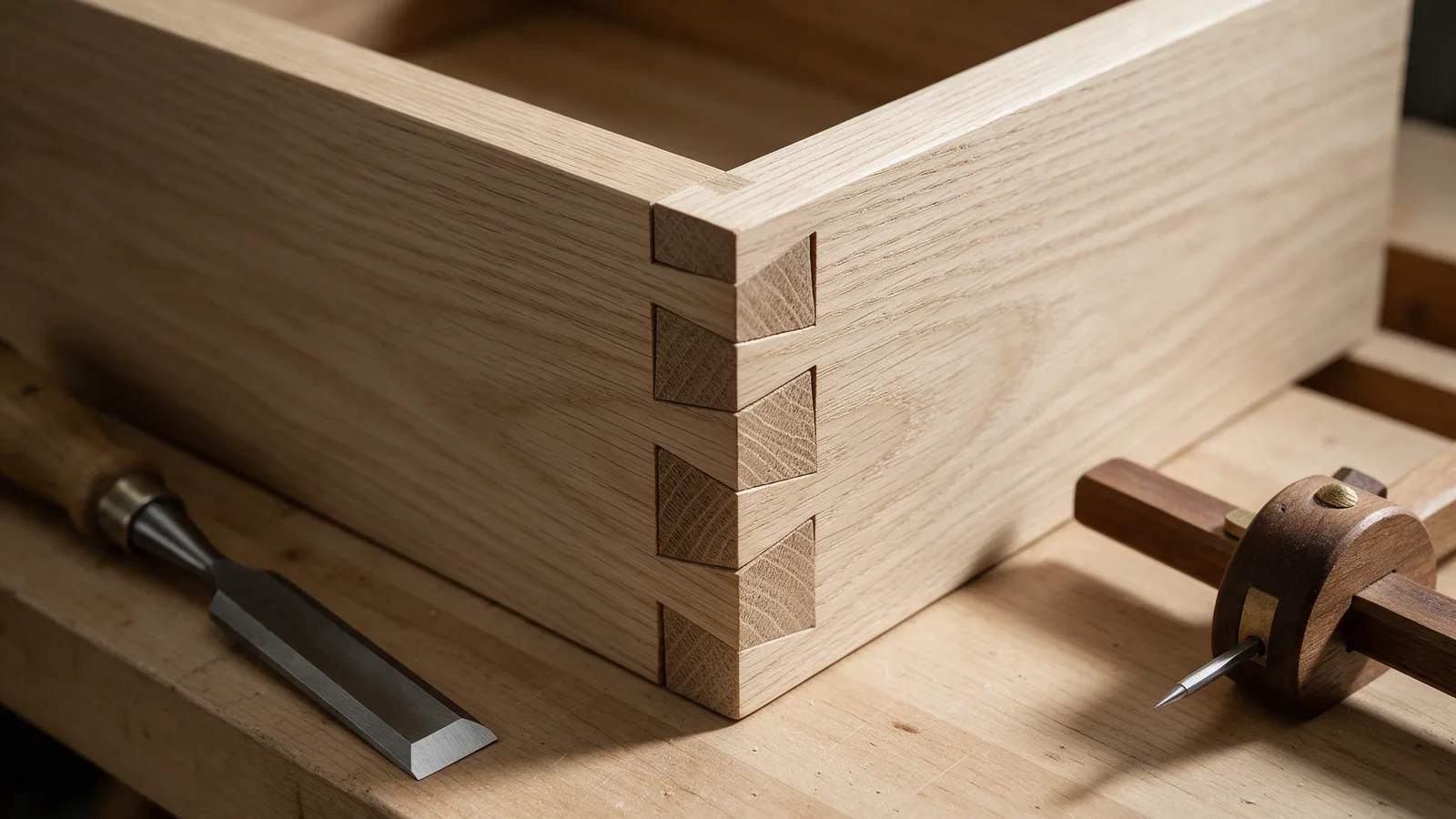
A 900 mm wide oak tabletop can change width by six millimetres between summer and winter. Fix it rigidly to a frame and it splits; let it float on slotted buttons with breadboard ends and it moves quietly for a century. The same logic runs through everything we make: frame-and-panel doors so the panel can shrink inside the frame, drawer sides in quarter-sawn stock, worktops oiled on both faces. It is why we kiln-dry and then acclimatise every board in the workshop for a fortnight before cutting it.
- Kiln-dried to 8–10% moisture, then rested in the workshop
- Breadboard ends and floating tops on every solid table
- Frame-and-panel for anything wider than 150 mm that is painted
- Ten-year guarantee that covers movement, because the design does
Painted or natural?
If you want a colour, the timber underneath should be tulipwood, Accoya or MDF-cored panels: stable, fine-grained and cheap, because you will never see it. Painting oak is paying for grain you then hide. If you want the wood to show, oak for most things, ash where you want it paler, walnut or elm where the piece is the point. Sapele and Accoya for anything outside.
Can I choose my own boards?
For furniture, yes, and we would rather you did. We keep oak, ash, walnut and elm in stock; you come to the workshop, we pull boards, and you pick the ones whose grain and colour you like. For kitchens and wardrobes the boards are selected for consistency rather than character, and we do that.
Where does it come from?
European oak from France and Croatia, ash and elm from Britain where we can get it, walnut from the United States, sapele from certified West African forestry, Accoya from New Zealand pine treated in the Netherlands. All of it chain-of-custody certified, and we keep the paperwork.
Not sure which? Ask.
Tell us what the piece has to do and where it will live. Ffion will suggest a timber and a finish, with samples, before anything is drawn.