Porcelain, sandstone, limestone, setts
Patios and paving
Patios, paths and steps laid on a proper base with a fall and a drain, in porcelain, Indian sandstone, Welsh limestone or clay setts, pointed to last.
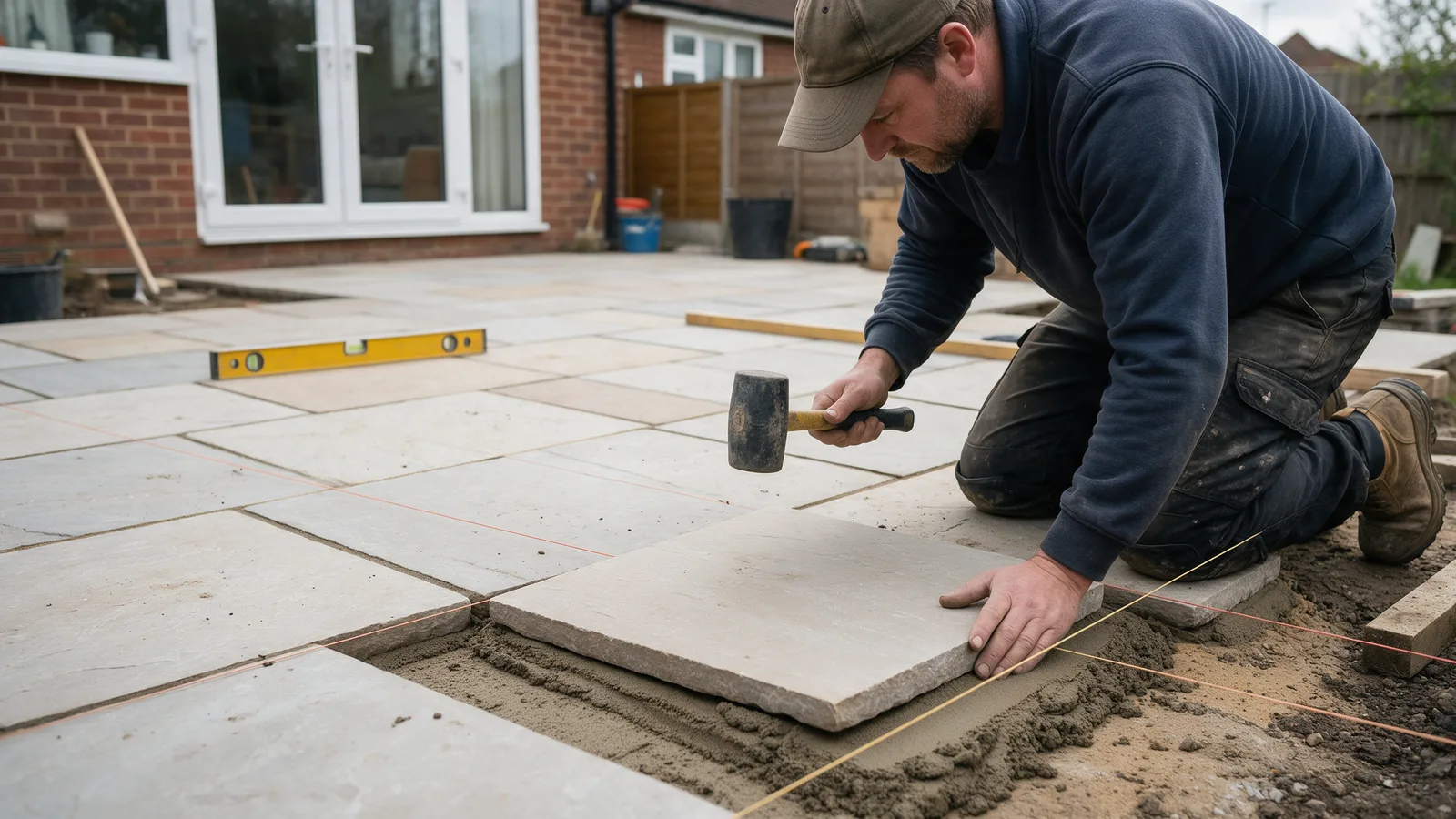
A patio is a floor outdoors. It needs the same foundation as a floor indoors, and in this climate it needs somewhere for the water to go.
We dig out to at least 150 mm, lay and compact a crushed-stone sub-base, and bed every slab on a full mortar bed with a primer so it cannot rock or lift. The patio falls away from the house at 1 in 80 to a channel or soakaway. Jointing is a brush-in resin compound or a proper mortar point, never sand, so the weeds and ants stay out.
Porcelain is the most popular choice now: it does not stain, does not grow algae and does not need sealing, and the better ranges look like stone. Indian sandstone is warmer and cheaper; Welsh limestone and Pennant are what the old gardens round here were paved in and suit a period house. Clay setts make the best paths and edges. We bring samples to the design visit.
What is included
- Excavation and compacted sub-base
- Full mortar bed and primer under every slab
- Fall to a drain, channel or soakaway
- Resin or mortar pointing
- Steps, edges and retaining walls
- Five-year guarantee
What it costs
Patios from £3,200 for 20 square metres in porcelain or sandstone, including excavation, a compacted sub-base, drainage, slabs, pointing and waste removal. Steps and retaining walls quoted. All prices include materials, labour, waste removal and VAT. See the full price list.
Questions about patios
Porcelain or sandstone?
Porcelain if you want it to look the same in ten years with a hose and nothing else. Sandstone if you want warmth and a patina and do not mind a pressure wash each spring. Porcelain costs about 20% more laid.
Will the patio need planning permission?
Rarely. A front garden paved in a non-permeable material over five square metres does, unless it drains to a lawn or border. We design for that anyway.
Start with a visit.
Cerys comes to the garden, measures it and listens, for free. A sketch follows, then a plan, then one price. No pressure at any stage; some people build it three summers later.