New lawns, renovation, artificial where it makes sense
Lawns and turfing
New lawns from turf or seed on properly prepared ground, worn lawns renovated rather than replaced, and artificial grass where a real lawn genuinely will not grow.
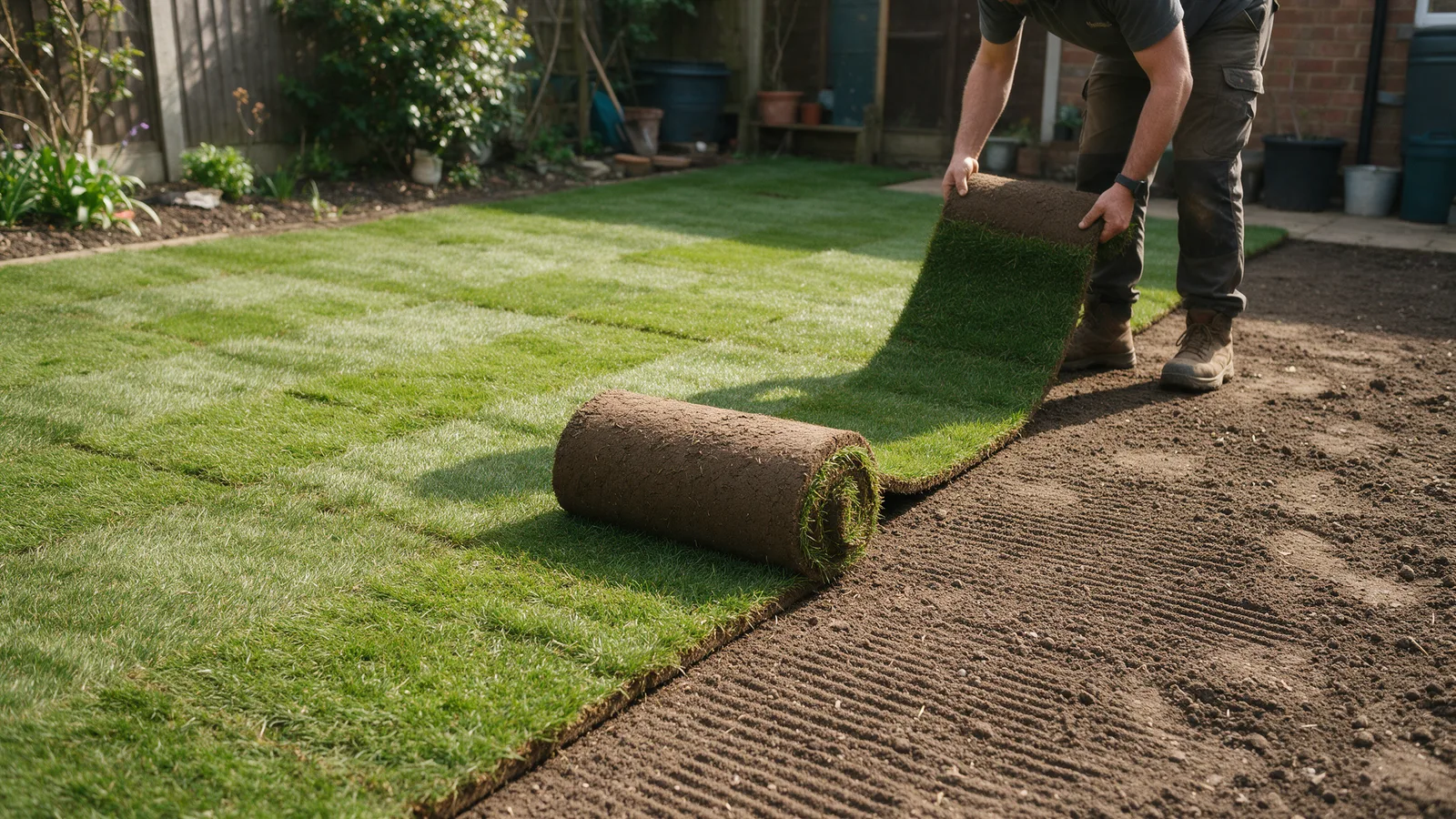
Turf is the last five minutes of a lawn. The other three days are what is underneath it.
A new lawn starts with stripping the old one, cultivating the ground, correcting the levels and adding topsoil where the Vale clay is too heavy. Then it is raked, firmed, raked again and the turf laid in a brick pattern on the same day it arrives. We use a hard-wearing rye and fescue mix for family gardens and a finer blend for show lawns. Seed is cheaper and better in autumn if you can wait a season.
Most tired lawns do not need replacing. Scarifying, aerating, top-dressing and overseeding in September turns a moss-and-bare-patch lawn into a lawn by the following May, at a third of the cost. We will tell you which yours needs.
Artificial grass has a place: a shaded north-facing yard, a dog run, a roof terrace. It does not have a place in a sunny back garden where real grass will grow, and we will say so rather than sell it.
What is included
- Old lawn stripped, ground cultivated and levelled
- Topsoil and soil improver where needed
- Turf laid the day it is delivered, or seeded
- Renovation: scarify, aerate, top-dress, overseed
- Artificial grass on a proper free-draining base
- Aftercare sheet and a first-cut visit
What it costs
New turf lawns from £900 for 50 square metres including stripping, cultivating, levelling, topsoil and turf. Seeded lawns about 30% less. Renovation from £350. Artificial grass from £75 per square metre laid. All prices include materials, labour, waste removal and VAT. See the full price list.
Questions about lawns
When is the best time to lay turf?
Autumn and spring. Summer turf needs watering every day for three weeks; winter turf sits wet. We lay in summer only if you can water.
Start with a visit.
Cerys comes to the garden, measures it and listens, for free. A sketch follows, then a plan, then one price. No pressure at any stage; some people build it three summers later.