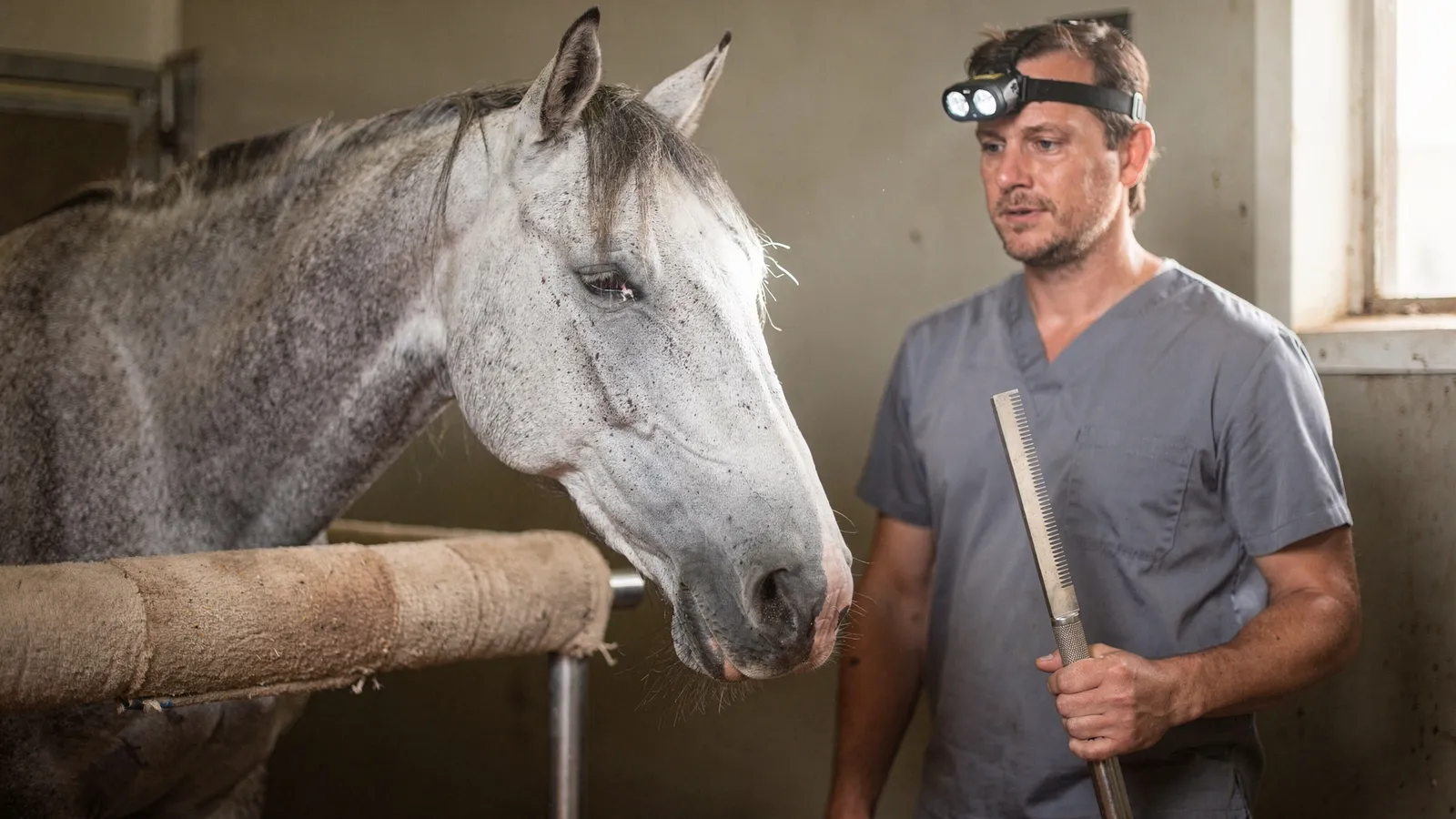
Teeth examined and rasped, by a vet
Dentals
A proper look with a mirror and a head torch, under light sedation where it is sensible. Sharp points rasped, hooks and overgrowths corrected, and the mouth charted for your record.
A horse will chew through a good deal of pain before it shows you. Then it drops feed, fights the bit, or quietly loses weight.
Every dental starts with a look: a gag, a head torch and a mirror, sometimes a camera, all the way to the back. We chart every tooth, so that you have something to compare next year. Sedation makes it safer and more thorough for most horses, and vets are the only people legally allowed to give it.
Rasping takes off the sharp edges that cut the cheeks and corrects any hooks and steps. We use motorised rasps carefully and hand rasps where they are better. Young horses need checks for wolf teeth and caps, and older horses for loose teeth and gaps where food gets packed.
Most horses need a dental every year, and some every six months. We will tell you which yours is, and we will not book you in for what it does not need.
What it includes
- A full mouth exam with a mirror and a light
- Rasping of sharp points, hooks and overgrowths
- A dental chart for your record
- Wolf tooth removal, under sedation
- Advice on bitting from what we see
- A reminder when it is next due
What it costs
A routine dental is £68 plus the visit. Sedation, if needed, is £25. The price list has the rest. We tell you what a job is likely to cost before we start.
Questions about dentals
My horse is 28 with few teeth left. Is it worth it?
More than ever. Old mouths get loose teeth and food packing, and these hurt. We will go gently and talk about soaked feed.
What signs should I look for?
Dropping balls of food, tilting the head when eating, fussing in the contact, bad breath, or food in the droppings. Or nothing at all, so book it anyway.
Worried? Ring. Nobody here minds an unnecessary call.
A vet answers, day or night, and advice on the phone is free. For everything else, there is a round day.