Five to eleven, two age groups, up to twice a week, white belt to junior black, £32 a month
Kids karate
Shotokan karate for five to eleven-year-olds in two groups, Little Dragons (five to seven) and Juniors (eight to eleven), up to twice a week: basics, kata, controlled partner work and the grading syllabus, with the discipline and the confidence that come with them. No full contact, ever. £32 a month or £6 a session.
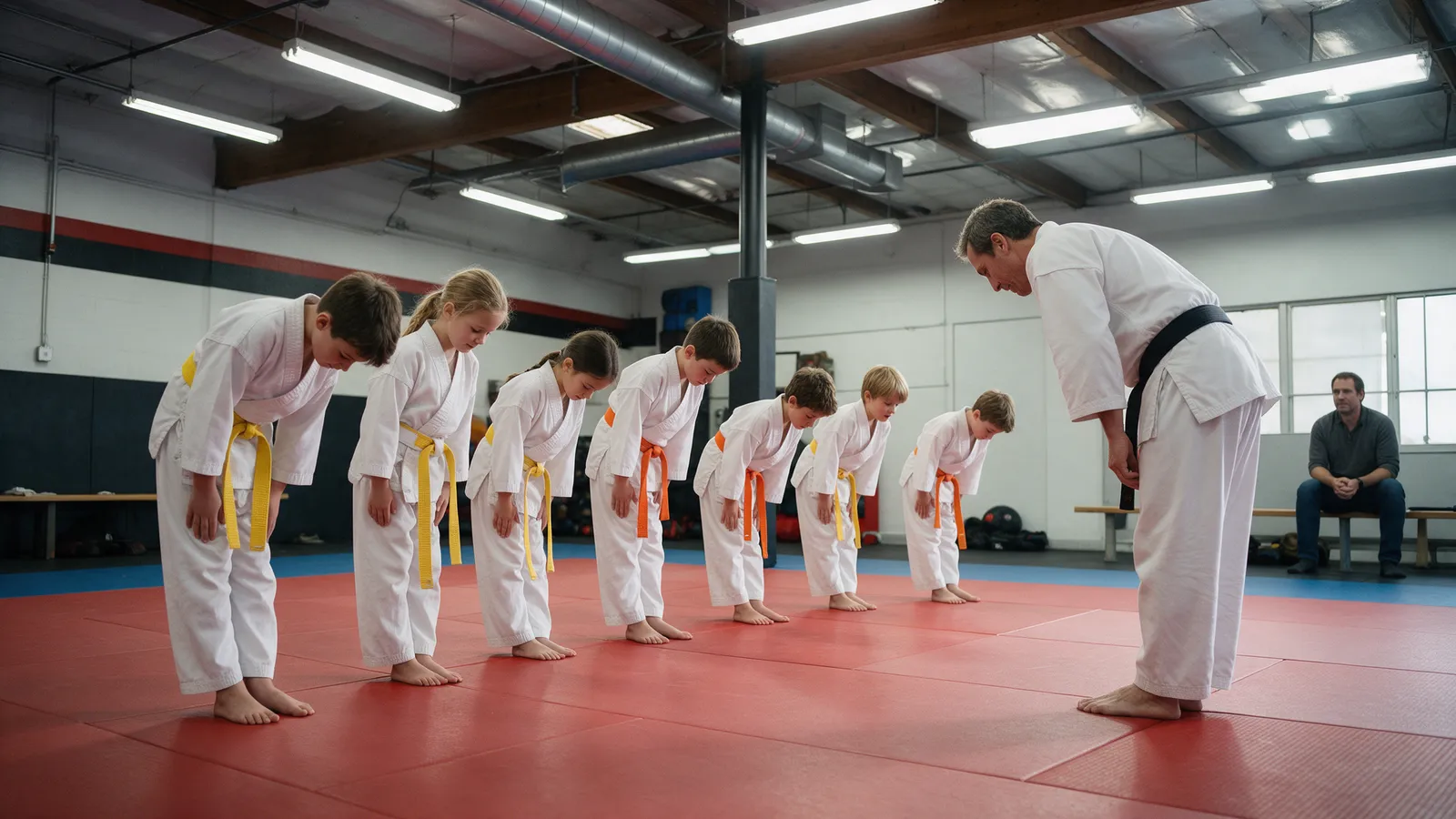
Kids karate is where most of the club started, including half the instructors. It is forty-five minutes of moving, listening, kicking, shouting and bowing, structured so that a five-year-old can do it and a ten-year-old is still stretched, and it is the class that parents say changes their child most outside the dojo.
Little Dragons, five to seven, train on Monday and Wednesday at 5pm for forty-five minutes: games that teach balance and distance, the first blocks and punches, stances that hold, the first kata, and the dojo rules, which are short and taught with the techniques. The emphasis is on listening and on control, because a five-year-old who can stop a punch an inch from a pad can be trusted with a partner. Gradings come roughly every four months, with a stripe system between belts so that progress is visible every few weeks.
Juniors, eight to eleven, train on Monday and Wednesday at 5:50pm for an hour: the full kyu syllabus of kihon (basics), kata (forms) and kumite (partner work), the latter strictly controlled and non-contact to the head. Juniors can grade every four months from white to junior black belt, which most who stay reach at around twelve or thirteen, and they move up to the teens class at twelve or when Gareth judges them ready.
There is no full contact in any children's class and no sparring at all until a child has their orange belt and has shown control in drills. Mats are cleaned before every children's session, mouthguards are compulsory for partner work from yellow belt, and a parent may watch every session from the bench along the side wall.
What parents notice first is not the kicking. It is the bow at the door, the standing still in line, the willingness to try something in front of other people and get it wrong. We teach those deliberately. A child who struggles with any of them is not a problem to us; they are the reason the class exists, and the instructors are good at it.
What is included
- Little Dragons (5–7) Monday and Wednesday 5pm, forty-five minutes
- Juniors (8–11) Monday and Wednesday 5:50pm, an hour
- The kyu syllabus to junior black belt, with stripes between gradings
- No full contact; controlled partner work from orange belt only
- A parent may watch every session from the bench
- £32 a month for both weekly sessions, or £6 a session
What it costs
Kids karate £32 a month for up to two sessions a week, or £6 a session. Licence £25 a year; a kids gi £22. No joining fee and no contract. The timetable has every session with its spaces and the memberships side by side; the gradings page has the dates, the places left and the belt ladder.
Questions about kids karate
My child is very shy. Is karate right for them?
Often it is exactly right. The class is structured, the instructor does the talking, and nobody is asked to perform alone until they want to. Most shy children are shouting their kiai by the third week. Book the free session and sit on the bench; you will see in forty-five minutes.
Is it violent?
No. Children learn to control a technique so precisely that it stops before contact, and that control is what is graded. Sparring is non-contact to the head, gloved, and only from orange belt. Children who have learned karate are, in our experience and every parent's, less likely to fight, not more.
What do they need?
A T-shirt and joggers for the first month. After that a gi (£22, we stock them) and the association licence (£25 a year, which includes the insurance). Mouthguards from yellow belt. That is all.
Your first session is free. Bring a T-shirt and joggers.
Tell us who is training, how old they are and the discipline you are curious about, and we ring back the same evening with a session that has space. Train barefoot on the mats, ask the instructor anything afterwards, and decide then. Or ring the club.