Gi and no-gi, adults and teens from fourteen, Tuesday, Thursday and Saturday, with Ffion Davies, brown belt
Brazilian jiu-jitsu
Brazilian jiu-jitsu, the grappling art of positions, sweeps and submissions, for adults and teens from fourteen, on Tuesday and Thursday at 7pm in the BJJ area and Saturday at 11:30am no-gi, with Ffion Davies, brown belt under a black belt affiliation. Technique, drilling and positional sparring every session; the safest way to spar there is.
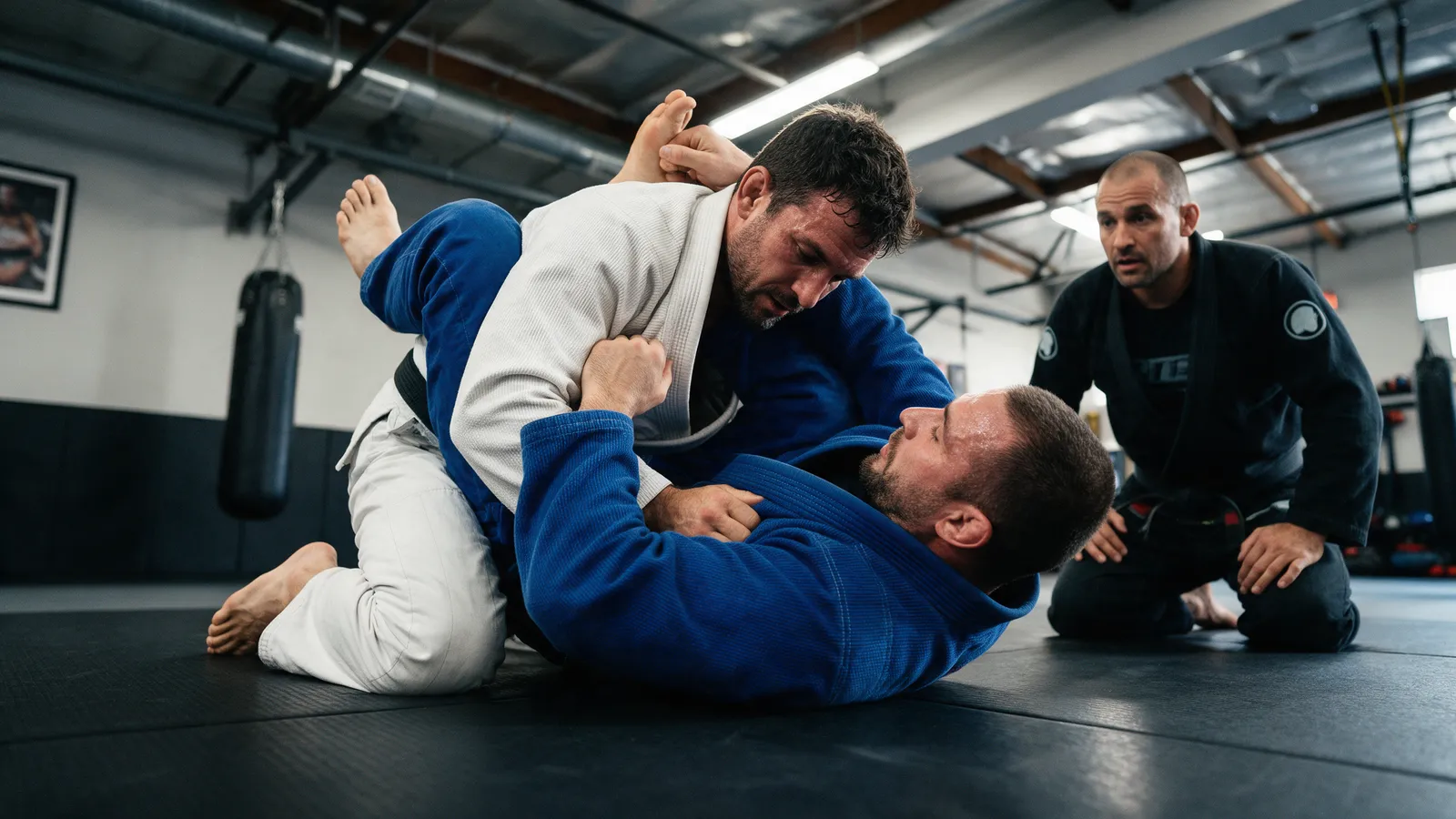
Jiu-jitsu is the martial art people start for fitness, stay in for the puzzle, and recommend to everyone they know. It is wrestling on the floor with no strikes, where a smaller person who knows the technique beats a bigger one who does not, and where you can train hard every session because the other person can always tap.
A session is an hour and a quarter: a warm-up of movement drills (shrimping, bridging, breakfalls), half an hour of technique taught in a sequence over the month (guard passing in one, escapes in the next), drilling in pairs, and twenty minutes of positional sparring, where pairs start from a set position and work one goal. Free sparring ("rolling") ends the Thursday session for anyone who wants it. Beginners are paired with a blue belt or above for their first month.
Tuesday and Thursday are in the gi, the heavy cotton jacket and trousers that give you grips; Saturday at 11:30 is no-gi, in shorts and a rash guard, faster and closer to wrestling. Ffion holds a brown belt and teaches under a black-belt affiliation whose head coach visits for a seminar and gradings twice a year. Belts in BJJ take years (a blue belt is typically two), and stripes on the belt mark progress in between.
It is the safest martial art to spar because nobody is struck and a tap (on the mat or the partner) ends everything instantly. The rules are strict: tap early, let go immediately, no heel hooks or neck cranks for anyone below brown belt, and no slamming. Ffion stops any pair who are not following them, and in five years nobody has left the club with worse than a sore neck.
Teens from fourteen train with the adults with parental consent, partnered by size and grade. Women make up about a quarter of the BJJ class and there is an open mat on the first Sunday of each month for women only, which Ffion runs.
What is included
- Gi on Tuesday and Thursday 7pm; no-gi on Saturday 11:30am
- Technique in a monthly sequence, drilling, positional sparring every session
- Beginners partnered with a blue belt or above for the first month
- Strict rules on taps and submissions; no dangerous locks below brown belt
- Seminars and belt promotions with the affiliation's black belt twice a year
- A women-only open mat on the first Sunday of each month
What it costs
£45 a month for every BJJ session, £60 for everything, or £9 a session. A BJJ gi £65; club gis lent for the first month. No joining fee and no contract. The timetable has every session with its spaces and the memberships side by side; the gradings page has the dates, the places left and the belt ladder.
Questions about brazilian jiu-jitsu
I am not flexible or strong. Does that matter?
No; that is what the technique is for. Flexibility and strength arrive with training, and a lot of BJJ is about not needing either. The people who get good are the people who keep turning up, not the ones who started strong.
Is it safe?
It is the safest form of full-resistance sparring there is, because nobody strikes anyone and a tap ends the exchange immediately. The rules on which submissions are allowed at which belt are strict and enforced.
Gi or no-gi first?
Gi, usually: the grips slow things down and make the technique easier to learn. Most members do both within a few months. The club lends a gi for the first month.
Your first session is free. Bring a T-shirt and joggers.
Tell us who is training, how old they are and the discipline you are curious about, and we ring back the same evening with a session that has space. Train barefoot on the mats, ask the instructor anything afterwards, and decide then. Or ring the club.