MOT test
The MOT test, explained.
What the tester checks, how long you will be, and exactly what happens if it fails. Then book an hour slot at the bottom of the page.
What is tested
Everything on the DVSA list, nothing that is not.
The MOT checks that the car is safe and its emissions are within limits on the day. It is not a service and does not check the engine, clutch or gearbox. These are the areas, in the order the tester works through them.
Lights and electrics
Every lamp, its colour, aim and condition, the horn, the battery and wiring, and warning lights on the dash.
Body, structure and doors
Corrosion in structural areas, sharp edges, doors, bonnet and boot catches, towbar, number plates and VIN.
Steering and suspension
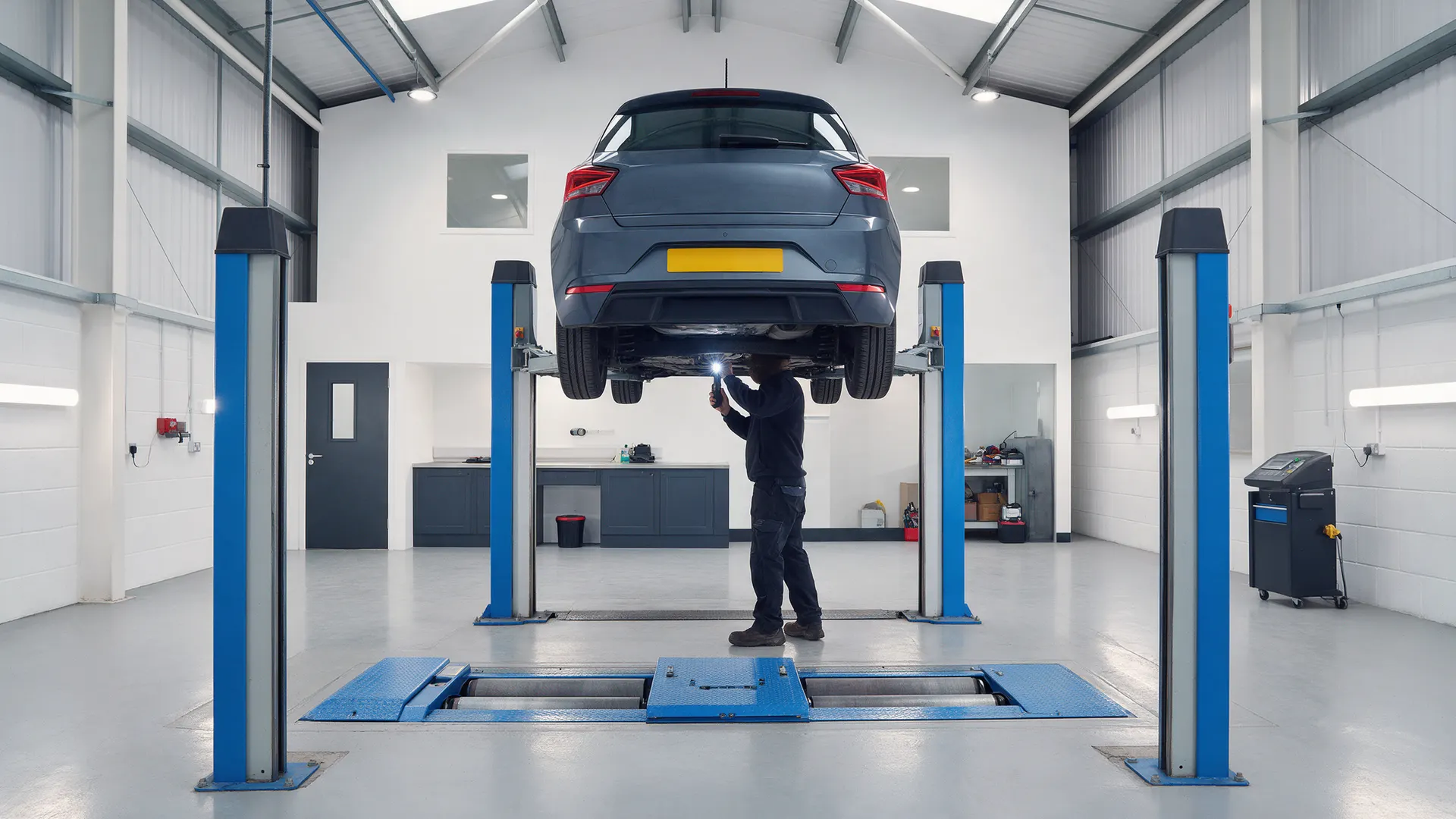
Play, wear and security of every joint, bush, spring and damper, checked on the lift with the wheels free.
Brakes
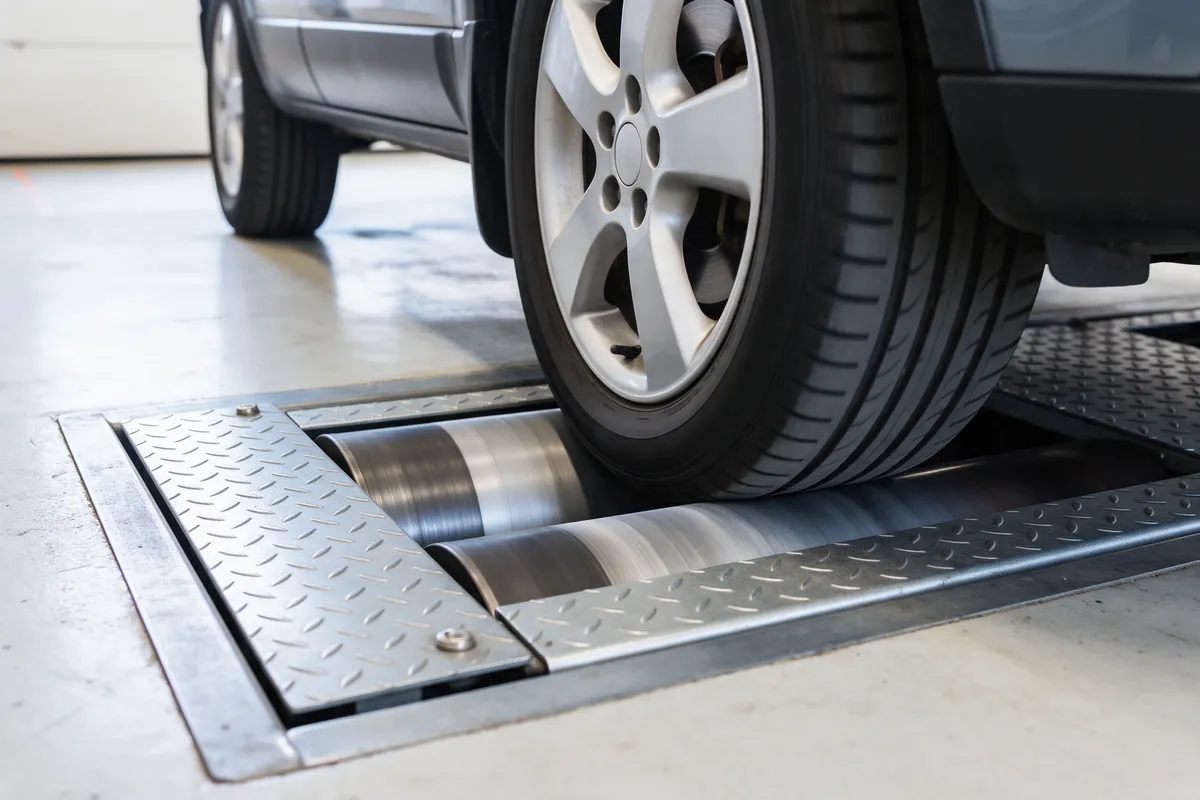
Pads, discs, pipes and the handbrake inspected, then the brake efficiency and balance measured on the rollers.
Tyres and wheels
Tread depth, condition, size and type on each axle, wheel security and condition.
Emissions and exhaust
Exhaust leaks and security, catalyst present, then smoke or gas readings against the limits for the car.
Seat belts, seats, mirrors
Belts, buckles and mounts, seat security, mirrors, the driver's view and the wipers and washers.
Registration and identity
Plates in a legal font and spacing, the VIN present and matching, and the vehicle details on the DVSA system.
Pass, fail, advisory
What the sheet actually means.
Dangerous means the car must not be driven until it is fixed, by law. Major means it fails and needs fixing before a retest. Minor means it passes but the item is noted. Advisory is the tester's opinion of what will need attention before the next test. We explain every line on the sheet before you leave, and we do not write advisories to sell work.
- Fail on something we fix the same day: retest free
- Take it elsewhere and return within 10 working days: partial retest free for most items
- Test up to a month early and keep your renewal date
MOT questions
When can I have my MOT done?
Up to a month (minus a day) before the current certificate runs out, and you keep the original expiry date. If your MOT expires on 15 June you can test from 16 May and the new certificate still runs to 15 June next year.
How long does it take?
A car test takes about 45 minutes. We book one-hour slots so there is time to talk you through anything that comes up. Vans take about an hour.
What happens if it fails?
You get a refusal certificate listing the dangerous, major and minor faults. If we can fix the failure items the same day, we do and retest for free. If you take it away and bring it back within ten working days, the partial retest is free for most items. Dangerous faults mean the car cannot legally be driven away; we tell you before you have to decide.
Can I drive with an expired MOT?
Only to a pre-booked MOT test or to a garage for repairs needed for the test. Your insurance may not cover you otherwise. Book first, then drive.
Do you do the repairs too?
Yes, but the tester never sells the work. If the car fails, the sheet goes to the workshop side and you get a quote you can take anywhere. Most people stay because the retest is free and the price is fair.
Do you test motorcycles and vans?
Class 1 and 2 motorcycles and Class 7 vans up to 3,500kg, as well as Class 4 cars and motorhomes. We do not test minibuses or anything over 3.5 tonnes.